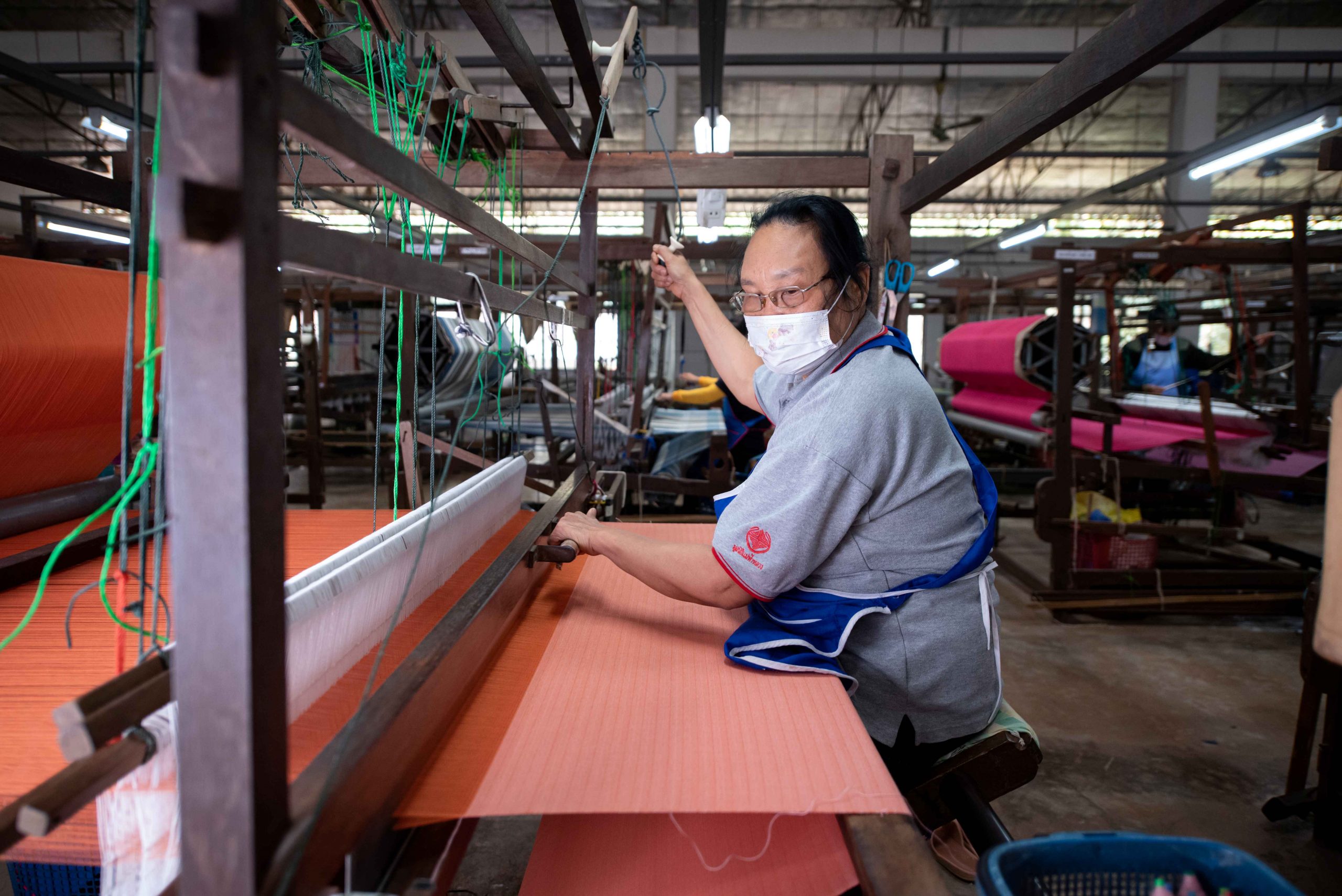
To mark World Environment Day on June 5, as the world faces worsening environmental crises, climate change and biodiversity loss, the Doi Tung Development Project (Area for Royal Development) in Chiang Rai has reaffirmed its role as one of Thailand’s leading models of sustainable development.
Operated by the Mae Fah Luang Foundation under Royal Patronage (MFLF), the project has demonstrated that successful environmental restoration requires a comprehensive approach — one that addresses people’s living conditions, creates viable livelihoods, manages natural resources and enables communities to participate in shaping the future of their own areas.
Over nearly four decades, Doi Tung has been transformed from denuded mountains affected by narcotic-crop cultivation, shifting agriculture and the depletion of natural resources into an area where more than 90% of the forest has been restored.
The transformation has been achieved through land-use planning that enables communities and forests to coexist, alongside biodiversity restoration, zero-waste-to-landfill management, water stewardship, renewable energy and energy-efficiency measures, the reuse of production residues, carbon-credit development that benefits local communities and the cultivation of a new generation of environmental stewards.
These efforts have turned the Doi Tung Development Project into a “sustainability model”, an environmental learning destination and a development case study that attracts thousands of visitors from Thailand and overseas each year.
Knowledge and experience developed in the project area have also been extended through sustainability advisory services for organisations seeking to advance their own environmental, social and sustainable-development initiatives.
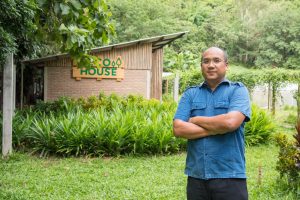
Dr. Thanapong Duangmanee, Director of Environmental Policy at the Mae Fah Luang Foundation under Royal Patronage, said the most important lesson from Doi Tung was that protecting forests required an understanding of the lives of the people who depended on them.
“If we want to protect forests, we must understand the lives of the people who live alongside them,” Dr. Thanapong said.
“Sustainable conservation does not mean completely prohibiting people from using natural resources. It means designing a system that allows people to use those resources in moderation, responsibly and with a shared understanding of the long-term benefits.
“Today, the Foundation’s environmental work goes beyond forest restoration. It encompasses waste, water, energy, carbon and biodiversity management, as well as the development of young people who understand the value of natural resources. Environmental sustainability can only be achieved when communities themselves take ownership of the change.”
People and forests coexist as ecosystems recover
The success of the Doi Tung Development Project stems partly from the clear allocation of land for different purposes, including conservation forests, economic forests, community-use forests, farmland and residential areas.
This approach provides communities with livelihoods, income and a defined role in managing natural resources. When people have viable livelihood alternatives, pressure on natural forests declines, allowing ecosystems to recover over time.
Biodiversity is also an important indicator of a forest’s recovery. The project therefore places strong emphasis on the conservation, restoration and continuous monitoring of plants, wildlife, water sources and surrounding ecosystems. The information collected serves as a foundation for long-term planning that allows people, forests and natural resources to coexist.
Zero waste to landfill
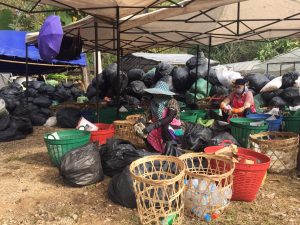
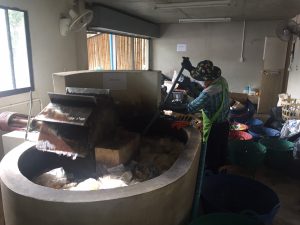
Waste management within the Doi Tung Development Project is guided by the principle that waste should not end up in landfill. The project has achieved zero waste to landfill since 2018, despite encompassing offices, factories, restaurants, cafés, a hotel, tourist attractions, communities and schools, while welcoming approximately 500,000–600,000 visitors annually.
About 102.4 tonnes of waste are managed each year.
The system begins with waste separation at source into six categories: recyclable, biodegradable, hazardous, general, infectious and other waste.
Each category is then managed appropriately. Materials may be reused, converted into animal feed, transferred to licensed waste-management companies or used as an energy source.
This approach turns waste into a resource through an integrated management system. It has also been extended to 29 villages in the project area, helping households, schools and communities reduce the volume of waste requiring disposal.
Water management
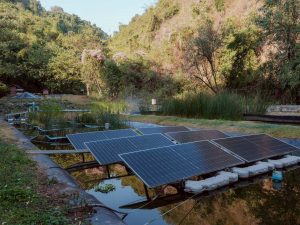
The Doi Tung Development Project’s water-management approach covers efficient consumption, treatment, reuse and continuous water-quality monitoring at several locations.
These include the Foundation’s Bangkok office, Doi Tung Lodge, the Handicraft Production and Distribution Centre, the dyeing facility, the mulberry-paper facility and macadamia plantations.
Measures include removing colour from wastewater generated by dyeing processes and reusing treated water for appropriate activities. This helps reduce demand for fresh water, ease pressure on natural water sources and enable economic activities to proceed alongside the protection of upstream ecosystems.
Renewable energy and measurable savings
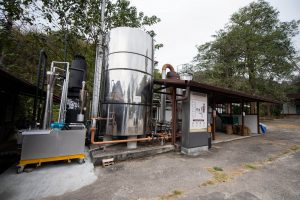
The project uses renewable energy and energy-conservation measures suited to the operations of each facility. These include solar-panel installations, a gasification system using bamboo charcoal made from bamboo affected by mass flowering and die-off, biomass-powered hot-water systems for boiling, bleaching and dyeing textiles, and biodiesel production to reduce fossil-fuel consumption.
Together, these measures reduce greenhouse-gas emissions by approximately 163.3 tonnes of carbon dioxide equivalent annually and cut energy costs by more than 1.46 million baht a year.
The results demonstrate that carbon reductions can begin with the appropriate use of locally available resources, with outcomes clearly measured in terms of both environmental impact and operating costs.
Turning production residues into new resources
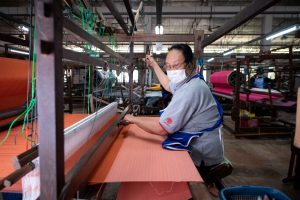
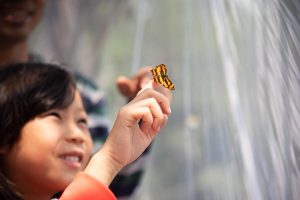
Circular-economy products developed under the DoiTung brand provide another example of how production residues can be turned into valuable resources.
Scraps and by-products from handicrafts, textiles, ceramics, coffee and macadamia production are reused in products, manufacturing processes and biomass energy generation. Wastewater from the dyeing facility is also treated and reused.
These practices have earned DoiTung several circular-economy and environmental certifications and labels. They include the Circular Economy Performance Assessment System (CEPAS) developed by the Department of Primary Industries and Mines; the Circular Economy Management System for Business (CEMS), certified by Bureau Veritas; and ISO 14001 environmental management system certification by CCQM (Con Cert Quality Management GmbH).
DoiTung scarves and coffee products have also been registered for the Carbon Footprint of Product (CFP) label issued by the Thailand Greenhouse Gas Management Organization (Public Organization), while its coffee capsules have received the Circular Mark from the Thailand Environment Institute Foundation.
Carbon credits must benefit communities
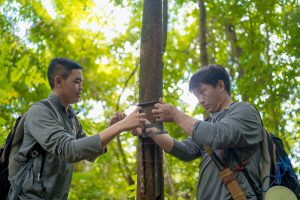
The Mae Fah Luang Foundation develops carbon credits as a mechanism for translating the environmental value of community-managed forests into economic benefits and long-term incentives for conservation.
A total of 57,480 rai within the Doi Tung Development Project has been registered under the Thailand Voluntary Emission Reduction Program, or T-VER. The area has generated 419,513 tonnes of carbon dioxide equivalent in carbon credits.
Knowledge gained from this work has been extended through the Carbon Credit Management in Forests for Sustainable Development Project, which expands cooperation with community forests across Thailand.
Young people as future stewards of natural resources
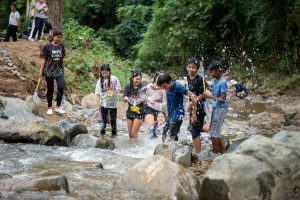
Recognising that young people will play a critical role in the future management of natural resources, the Doi Tung Development Project continuously promotes environmental awareness among younger generations in the area.
Activities include science fairs, energy and environmental exhibitions, the “Renewable Energy for a Low-Carbon Future” programme and the Doi Tung Young Guardians network.
The network gives local young people opportunities to learn, take action and communicate environmental issues within their communities.
From denuded mountains to regenerated forests, and from communities once deprived of opportunities to communities with stable livelihoods and an active role in managing natural resources, Doi Tung has become a “living model” demonstrating that sustainable development is possible when people and nature are enabled to thrive together in long-term balance.