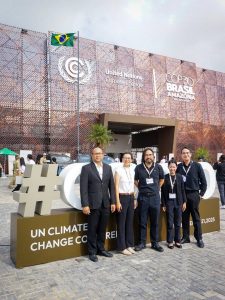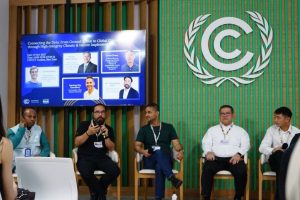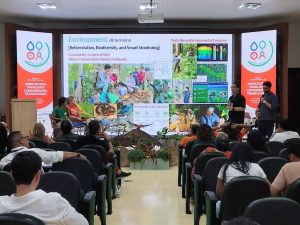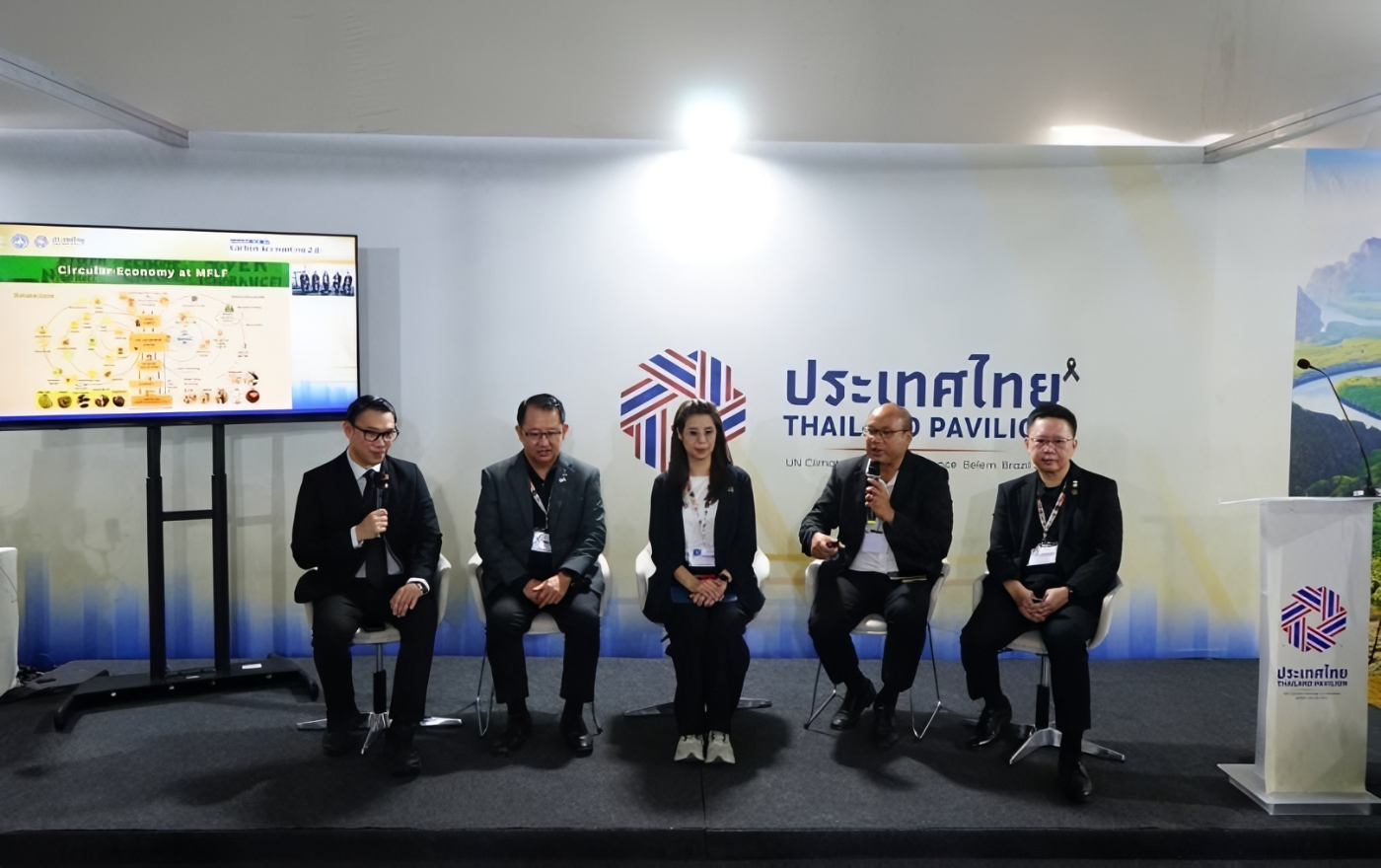
The Mae Fah Luang Foundation under Royal Patronage, led by M.L. Dispanadda Diskul, Secretary General and Chief Executive Officer, brought its management team and sustainability experts to participate in the 30th Conference of the Parties to the United Nations Framework Convention on Climate Change (COP30), a key global platform shaping the direction of climate and nature, held from 10 to 21 November 2025 in Belém, Pará, Brazil.
At COP30, the Mae Fah Luang Foundation exchanged knowledge across multiple sessions under the UNFCCC and the Thailand Pavilion, bringing lessons from the Doi Tung Development Project, a Royal Initiative in Chiang Rai Province, and from community forests across Thailand into international policy dialogues. The Foundation highlighted a development approach that connects people, communities, nature, and technology in concrete and practical ways. This reaffirms the role of Thai organizations in translating real world experience into contributions that inform global policy design, and underscores that effective and lasting solutions to climate change and nature conservation must start with people and communities as rightful stewards of their land. It requires safeguarding land rights, using transparent technology and financial mechanisms to strengthen communities, and creating space for field based knowledge to help shape the world’s future through sustained and equitable international cooperation.
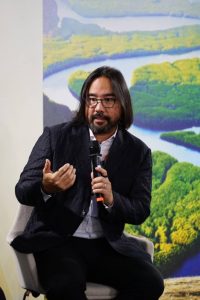
M.L. Dispanadda Diskul, Secretary General and Chief Executive Officer of the Mae Fah Luang Foundation under Royal Patronage, spoke at several key sessions, including “Tokenization: Decentralizing Carbon Market” and “Connecting the Dots from Ground Action to Global Commitments Through High Integrity Climate and Nature Implementation,” emphasizing that the world is transitioning from a high carbon economy to a low carbon economy, and that real impact will only be possible when “people and communities” are placed at the center of the transition. He stressed that “the heart of climate and nature is not technology or financial mechanisms, but the frontline people who live with forests, farm the land, and care for ecosystems. Technology should be used so the world can see and respect their value fairly.”
M.L. Dispanadda further noted that the future carbon market should be open, transparent, and accessible to the public. Technologies such as tokenization and blockchain can strengthen credibility, enable real time trading of carbon credits, and ensure that the value created can be traced as it flows back fairly to the communities protecting forests. He remarked that “if carbon credits become merely an asset in the market while communities do not benefit, the world will remain trapped in the same unequal economic system.”
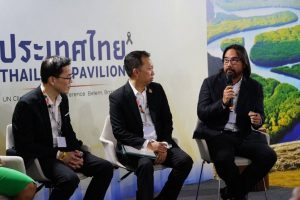
From a policy perspective, M.L. Dispanadda proposed that governments consider reallocating part of energy budgets or industrial subsidies to support biodiversity protection, an investment that costs less yet can deliver higher positive impact. He also emphasized the concept of “Collective Capitalism,” a form of capitalism that recognizes shared value among people, communities, and the environment, stating that “we must shift our mindset from using capital for profit to using capital to create value for society and nature together.”
He also spoke about the role of youth, noting that the voices of younger generations are increasingly influential, both as consumers and as drivers shaping the economic direction. “We are deciding the future of people not yet born. Environmental work must think across generations, act faster, and open space for youth to participate in decision making.”
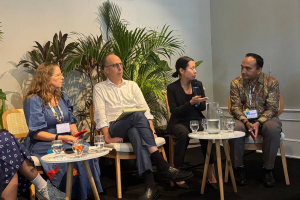
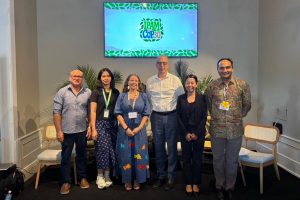
Meanwhile, Miss Ramrada Ninnad, Head of Sustainability at the Mae Fah Luang Foundation, joined the session “Forests, Agriculture and the Green Economy of the Global South” to present a case study from the Doi Tung Development Project. She described Doi Tung as a border area between Thailand and Myanmar that once faced poverty and forest encroachment, yet successfully restored forests and built stable community incomes. She stated, “Doi Tung has proven that forest restoration can only be sustained when local people have better economic options than before, and that knowledge from real places is something developing countries can share with the world.” She also reaffirmed that cooperation among developing countries is a vital force in advancing a green economy from the ground up.
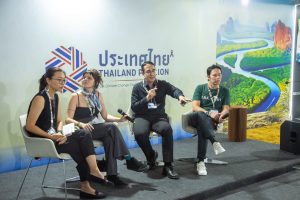
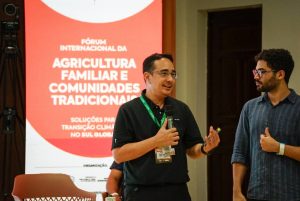
Mr. Smitthi Harueanphuech, Head of Nature Based Solutions & Special Projects at the Mae Fah Luang Foundation, shared insights in the sessions “Market Opportunities and Strategies” and “Case Study of Tropical Forest Conservation,” explaining that sustainability becomes possible when communities have stable livelihoods, agricultural products meet standards aligned with market demand, and there is long term cooperation with the private sector. He said, “If we want forests to last, we must help the people living with forests see their future lasting just as long.” He also proposed using satellite data and digital technology to enhance transparency in wildfire management and community carbon credit initiatives.
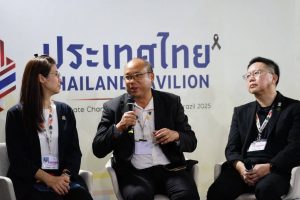
Dr. Thanapong Duangmanee, Director of Environmental Policy at the Mae Fah Luang Foundation, joined the session “Carbon Accounting 2.0: Accelerating Transparency and Trust on the Road to Net Zero 2050,” highlighting that credible carbon accounting requires real world data and community participation. “If carbon accounting systems begin without the voices and data from real places, no matter how complex the models are, they cannot build trust.” He explained that linking community level data with national standards can improve transparency and credibility of Thailand’s carbon accounting mechanisms on the path to Net Zero.
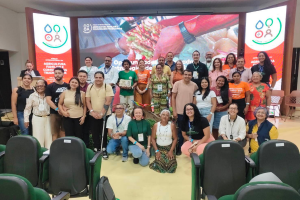
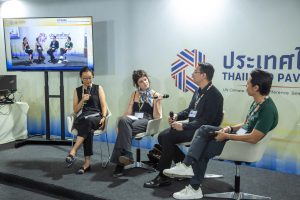
Dr. Supatchaya Techachoocherd, Nature based Solutions Expert, Mae Fah Luang Foundation, participated in the session “Local Experiences in Land Regularization for the Promotion of Sustainable Development,” emphasizing that land rights are “the first button” of development. If not addressed correctly from the start, communities will lack security and cannot plan for the long term. She said in the session, “Talking about climate and nature without talking about land rights is like not fastening the first button correctly.” She cited the Doi Tung Development Project approach, which works with communities to establish agreements that delineate forest areas and farmland, enabling villagers to plan long term crops and use resources responsibly.