Project aims to create lasting value for communities and the environment
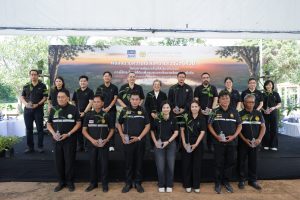
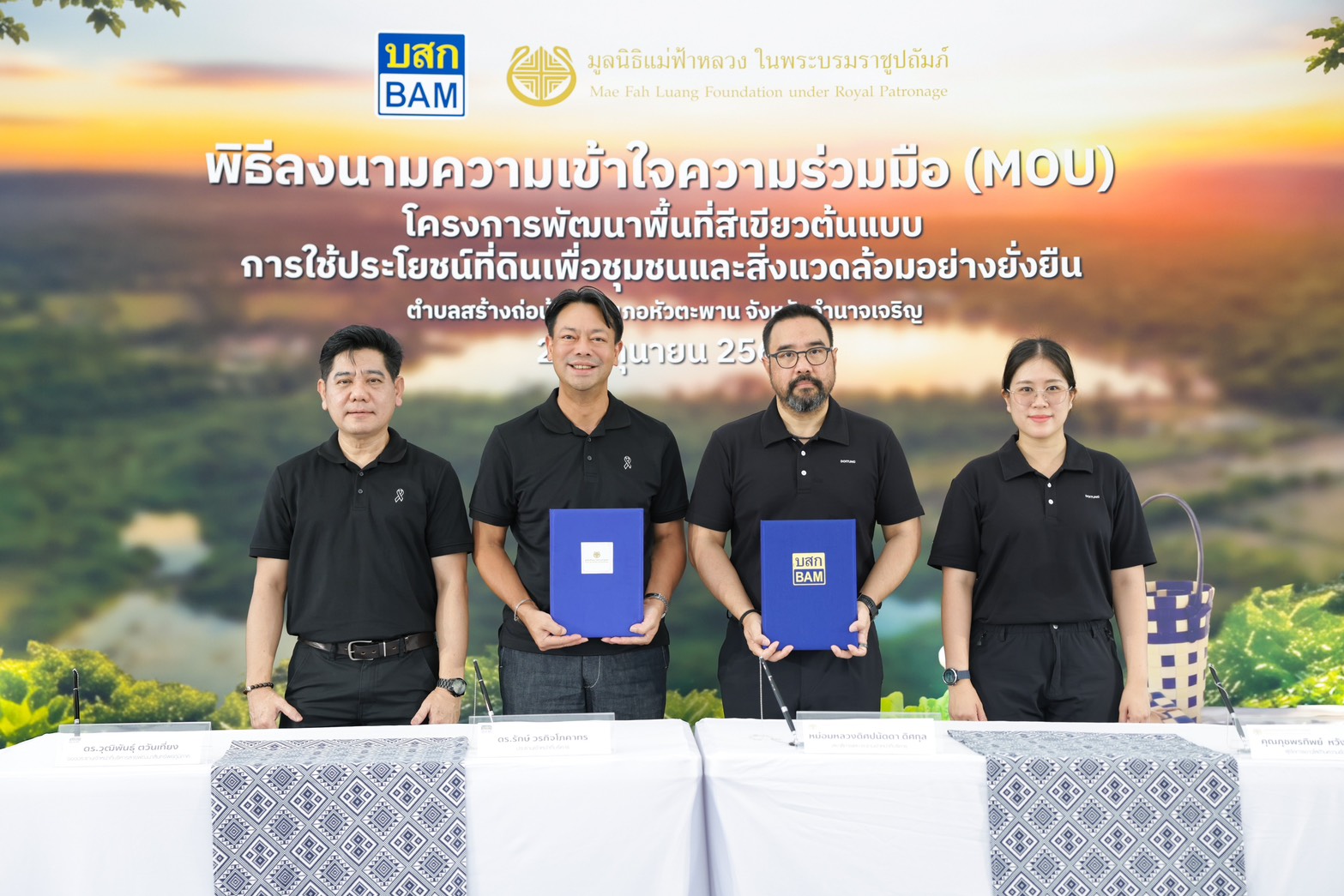
Bangkok Commercial Asset Management Public Company Limited (BAM) has signed a memorandum of understanding with the Mae Fah Luang Foundation under Royal Patronage (MFLF) to develop a 33-rai non-performing asset in Amnat Charoen into a model green space.
The “Model Green Space Development Project for Sustainable Land Use Benefiting Communities and the Environment” aims to transform the BAM-owned site into an area that delivers tangible benefits for local communities, society and the environment.
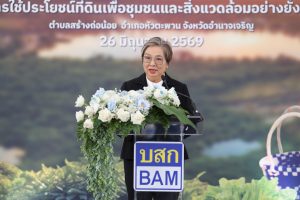
Mrs. Tongurai Limpiti, Chairman of BAM, said the collaboration represented an important step in bringing together the business sector, civil society and local communities to create balanced economic, social and environmental value.
BAM places importance on managing its assets while creating value for society in line with environmental, social and governance principles and its CSR-in-Process approach, she said.
The approach covers natural-resource restoration, the expansion of green space and improvements in people’s quality of life.
The project also aligns with BAM’s “Five Good Principles”: good for the country, society, customers, shareholders and employees.
Mrs. Tongurai said the initiative had the potential to become a model for creative land use that generated long-term shared value for all sectors. It could also serve as a learning site for ecosystem restoration and be replicated in other areas across Thailand.
The project reflects BAM’s ambition to transform “vacant land” into “land of opportunity” that delivers community benefits, creates jobs and income, and encourages sustainable local participation.
Turning non-performing assets into green assets
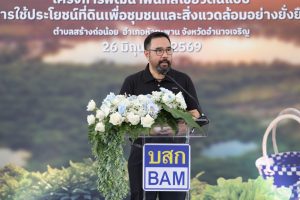
Dr. Rak Vorrakitpokatorn, Chief Executive Officer of BAM, said the company was working towards becoming a full-fledged sustainable “Value Creator”.
Asset management today must generate business returns while delivering positive social impact, he said. The green-space initiative demonstrates how a non-performing asset, or NPA, can be developed to create value across several dimensions.
The 33-rai site in Sang Tho Noi subdistrict, Huai Taphan district, Amnat Charoen, will be divided into two sections.
The first section, covering 31 rai, will be restored using a natural forest regeneration approach. A total of 3,600 trees representing 20 native species will be planted to rehabilitate the ecosystem, expand green space and enhance biodiversity.
The area will also be developed as a greenhouse-gas reduction project under the Thailand Voluntary Emission Reduction Program, or T-VER. It is expected to sequester approximately 29.45 tonnes of carbon dioxide equivalent annually.
The remaining two rai will be allocated for community use and economic and social activities. The project will seek to create jobs, generate income and develop occupational skills for more than 6,390 people across 13 villages.
Potential activities include an agricultural market, space for promoting local products, a community tree nursery, planting work and the long-term maintenance of the project area.
The development model will be based on meaningful community participation and the needs of local residents.
“This type of investment should not be regarded as a cost. It is an investment in improving asset quality and strengthening the organisation’s long-term sustainability,” Dr. Rak said.
“It will also lay the foundations for increasing the value of the property in the future. BAM aims to build on this initiative by developing a broader Green Asset Portfolio.
“Another important aspect of the project is its role as an ecological corridor between Dong Yai forest and the Chaloem Phrakiat Open Zoo. This will improve the continuity of green areas, strengthen the surrounding ecosystem and increase long-term carbon-sequestration potential.”
“Planting forests” alongside “planting people”
M.L. Dispanadda Diskul, Secretary-General and Chief Executive Officer of the Mae Fah Luang Foundation under Royal Patronage, said the foundation had worked for more than four decades to restore forests while strengthening local communities.
Over the past four to five years, MFLF has expanded its work by applying knowledge from the restoration and management of Doi Tung’s forests to community forests in 12 provinces across Thailand.
Sang Tho Noi is among the communities that have consistently demonstrated strong community forest management, he said.
The area has significant natural capital, local wisdom and an established livelihood base that can be further developed.
“The important point is that this project is not only about planting forests. It is also about planting people,” M.L. Dispanadda said.
“This means encouraging community participation, creating jobs and livelihoods, and developing the capabilities of local people alongside the proper and sustainable management of the environment. This is the mission that the Mae Fah Luang Foundation has pursued throughout its work.”
Under the development plan, the project will establish green space by planting native economic tree species in patterns that mimic natural forest growth.
The initiative will restore the ecosystem and support carbon sequestration while improving the quality of life of local communities through livelihood development.
The area is also expected to become a learning and study-visit destination in the future.
MFLF believes its collaboration with BAM will mark an important starting point for balanced development across economic, social and environmental dimensions. The initiative also has the potential to become a sustainable development model that can be adapted and replicated in other areas.