The Mae Fah Luang Foundation under Royal Patronage (MFLF) has highlighted lessons from the successful community forest model in Sang Tho Noi subdistrict, Huai Taphan district, Amnat Charoen province, following the community’s participation in the Carbon Credit from Community Forests for Sustainability project since 2023.
The initiative has demonstrated that carbon credits can be more than an environmental mechanism. They can provide communities with a structured system for protecting forests, funding for livelihood development and opportunities to generate sustainable income from their natural resources.
The area is now preparing for external verification and the submission of its carbon credits for certification by the Thailand Greenhouse Gas Management Organization (Public Organization), or TGO.
A total of 12,645.31 rai has been registered under the Thailand Voluntary Emission Reduction Program, or T-VER, with the area expected to generate 11,275 tonnes of carbon dioxide equivalent in credits annually.
The community forest is also being developed into an ecotourism route where visitors interested in sustainability can learn how forest conservation can support livelihoods, income generation and improvements in community well-being over the long term.
Carbon credits support forests and livelihoods
Launched in 2020, the Carbon Credit from Community Forests for Sustainability project brings MFLF together with government agencies, private-sector organisations and local communities. It uses carbon credits as a mechanism that enables communities to protect their forests while strengthening their capacity for self-reliance.
Two key funds have been established: the Forest Protection Fund and the Sustainable Community Development Fund.
The Forest Protection Fund finances firebreak construction, patrols, wildfire surveillance and forest restoration. The Sustainable Community Development Fund supports livelihood development and economic activities that build on each community’s natural-resource base.
The project has now entered its fifth phase. Amnat Charoen forms part of Phase 3, which began in 2023 and covers community forests in Chiang Rai, Chiang Mai, Yasothon and Amnat Charoen.
Private-sector partners from a wide range of industries have supported the initiative, including businesses in beverages, energy, petrochemicals, finance and banking, aviation, property, consumer goods and agri-food.
Their participation shows that the sustainability model developed through the Doi Tung Development Project can be scaled and adapted to different areas.
It also demonstrates that community forest protection is not solely a local environmental responsibility, but an important mechanism connecting Thailand’s climate targets, corporate sustainability goals and the quality of life of local communities.
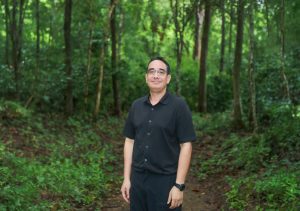
Mr. Smitthi Harueanphuech, Chief Nature Based Solutions Officer at MFLF, said the foundation had adapted its experience from the Doi Tung Development Project to expand the Carbon Credit from Community Forests for Sustainability project across several regions of Thailand.
The Northeast is one of the project’s key regions because of the strength of its communities, the value of its community forest resources and the readiness of local leaders, he said. The project currently operates in Amnat Charoen and Yasothon in the northeastern region.
“What the Mae Fah Luang Foundation considers most important is ensuring that forest protection is genuinely connected to the lives of local communities,” Mr. Smitthi said.
“A community forest is not simply a conservation area. It is a resource base, a foundation for livelihoods and an economic asset for local people.
“When a community has a strong management system, carbon credits can provide a mechanism for continuous forest protection while delivering long-term benefits to the community.”
More than 7,500 people connected to the forest
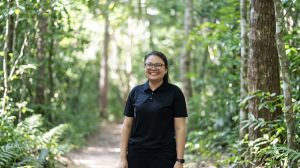
Ms. Pathomporn Songlilitchuwong, Senior Project Manager at MFLF, said Sang Tho Noi subdistrict had 16,385 rai of community forest designated under the Community Forest Act.
Of this, 12,645.31 rai has been registered under T-VER, covering 13 villages, 1,761 households and 7,596 residents.
The project is conducting surveys and updating site information to confirm project boundaries, assess changes in land use, estimate carbon sequestration and prepare greenhouse-gas monitoring reports.
The next steps will involve verification by an independent validation and verification body, followed by an application to TGO for carbon-credit certification.
The 13 villages receive financial support through the project’s two funds.
The Forest Protection Fund finances wildfire prevention, firebreak construction, patrols, wildfire surveillance, enrichment planting and the procurement of firefighting equipment.
The Sustainable Community Development Fund provides financing for local development and income-generating activities while communities wait for carbon credits to be issued. These activities include local food processing, handicraft production and the manufacture of organic soil conditioners.
Developing a community ecotourism route
Sang Tho Noi is also working with partner organisations to develop an ecotourism route under the Tourism Authority of Thailand’s Village to the World Season 5 project.
PTT Global Chemical Public Company Limited, or GC, is among the partners supporting the community’s development as a sustainability learning destination.
The initiative seeks to connect the area’s natural capital, local way of life and community capabilities through a tourism route that generates income while promoting the long-term stewardship of natural resources.
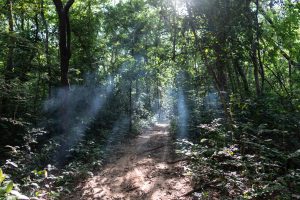
“What makes this area distinctive is that Dong Yai forest is not merely a conservation forest. It is the community’s natural capital and a foundation for local life,” Ms. Pathomporn said.
“It provides seasonal food and income from natural resources, supports local livelihoods and is now being developed into a sustainable tourism route.
“The area demonstrates how forests and communities can be managed together, and how local resources can be transformed into economic opportunities.”
Dong Yai forest is also regarded as the community’s “natural supermarket”, serving as a source of food and income and playing an integral role in the lives of local residents.
Its resources include seasonal mushrooms, red ant eggs, edible insects such as June beetles and stink bugs, fish and other products from local waterways.
The area also has a rich base of local knowledge, arts and crafts, including silk weaving, basketry, the processing of natural products and the production of pelletised organic soil conditioners.
These activities demonstrate the responsible use of natural resources and show how the community development fund can generate income that continues to circulate within the local economy.
Community develops shared forest-management system
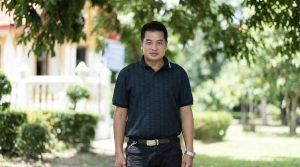
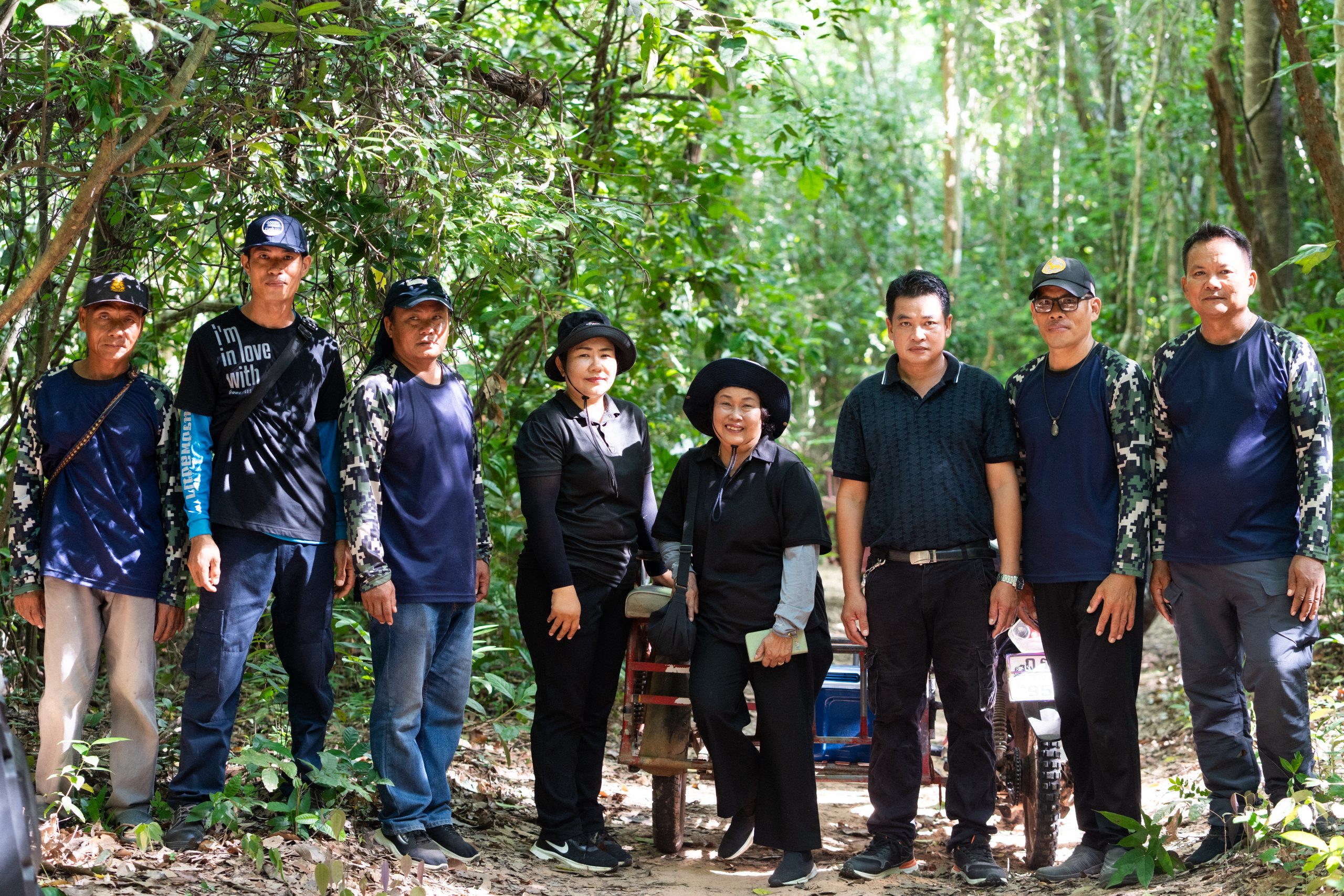
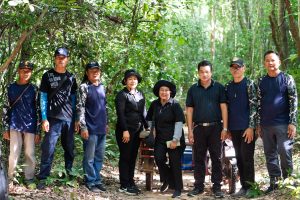
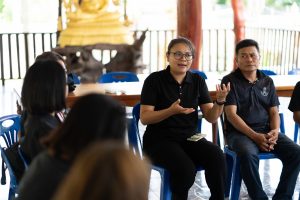
Mr. Tanu Somnam, Chair of the Ban Kham Kha Community Forest Committee and headman of Sang Tho Noi subdistrict, said participation in the project had helped residents recognise the value of forest protection more clearly.
Local people had long worked together to protect Dong Yai forest as a source of food and water and as a vital part of life across the subdistrict.
The project has helped the community establish clearer plans, responsibilities and common goals for wildfire surveillance, firebreak maintenance and forest patrols. It has also encouraged residents to consider how community resources can be used beneficially without damaging the forest.
“What makes the community proud is that Dong Yai is no longer simply a forest protected by local residents. It is becoming a learning destination that can generate income for the community,” Mr. Tanu said.
“Carbon credits are therefore not something distant from our lives. They are directly connected to our food, livelihoods, income and the future of our children.”
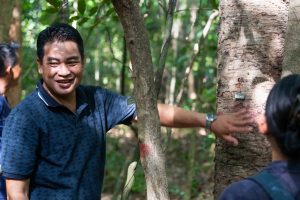
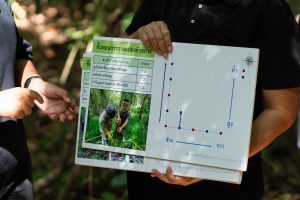
The tourism route currently under development will introduce visitors to community forestry and the measurement of trees for carbon-credit assessments.
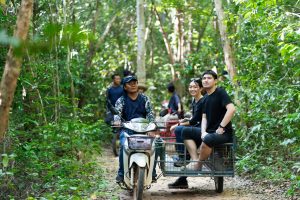
Activities will include rides on local motorised sidecar vehicles along forest routes developed from patrol trails and firebreaks, eco-printing using natural dyes, and visits to local silk and handicraft producers.
Visitors will also be able to visit the sacred Sang Tho well and take boat trips along the Lam Se Bai waterway to experience the natural landscape and the richness of northeastern forests along both riverbanks.
Project covers 303 communities nationwide
The Carbon Credit from Community Forests for Sustainability project now covers 303 community forests across 12 provinces: Chiang Rai, Chiang Mai, Phayao, Mae Hong Son, Tak, Kamphaeng Phet, Uthai Thani, Krabi, Yasothon, Amnat Charoen, Nan and Lampang.
The project encompasses 287,944 rai of forest and benefits 161,171 people from 52,359 households, with support from 30 partner organisations.
Project results demonstrate the effectiveness of involving communities directly in forest protection and wildfire prevention.
Monitoring of wildfire-damaged areas before and after communities joined the project found that the average affected area in Phases 1 and 2 fell from 11.41% to 1.99% in 2024.
In Phase 3, the proportion declined from an average of 8.17% to 1.18% in 2025, while Phase 4 recorded a decrease from 21.75% to 0.77%.
The figures indicate that the Forest Protection Fund and community-led management can deliver tangible reductions in wildfires, one of the major sources of PM2.5 air pollution from forest burning.
When communities have access to resources, effective management systems and fair incentives, community forests can simultaneously serve as a climate solution, a foundation for local economies and a source of long-term security and well-being for local people.