The Mae Fah Luang Foundation under Royal Patronage (MFLF) is building on nearly four decades of hands-on development experience at the Doi Tung Development Project (DTDP) in Chiang Rai to advance the “Doi Tung Living University”, a learning platform dedicated to sustainability.
The initiative distils lessons from the foundation’s work in environmental restoration, human and community development, livelihood creation, social enterprise and sustainable resource management into practical learning processes. Government agencies, private-sector companies, academic institutions and other interested organisations can adapt the knowledge to support their work in environmental, social and governance practices, sustainable leadership, nature-positive development, the circular economy and community development.
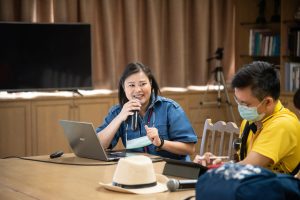
Visit-orn Rajatanarvin, Director of the Knowledge and Learning Centre at MFLF, said the experience of the Doi Tung Development Project had demonstrated that sustainable development could not be achieved by addressing individual problems in isolation. It required a comprehensive understanding of the connections between people, nature, the economy and society.
“Doi Tung is not simply a development project site. It is a vast living classroom where every tree and every square inch of land embodies knowledge gained through real-world experience — from achievements and lessons learned to challenges and approaches that can be adapted to other contexts,” she said.
“The Living University was established to gather, distil and share this body of knowledge so that it can benefit society, Thailand and the wider world.”
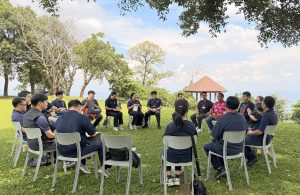
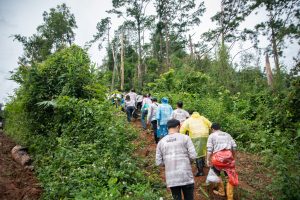
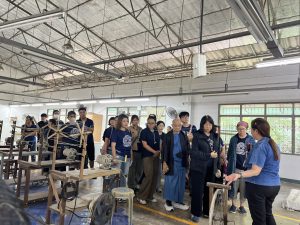
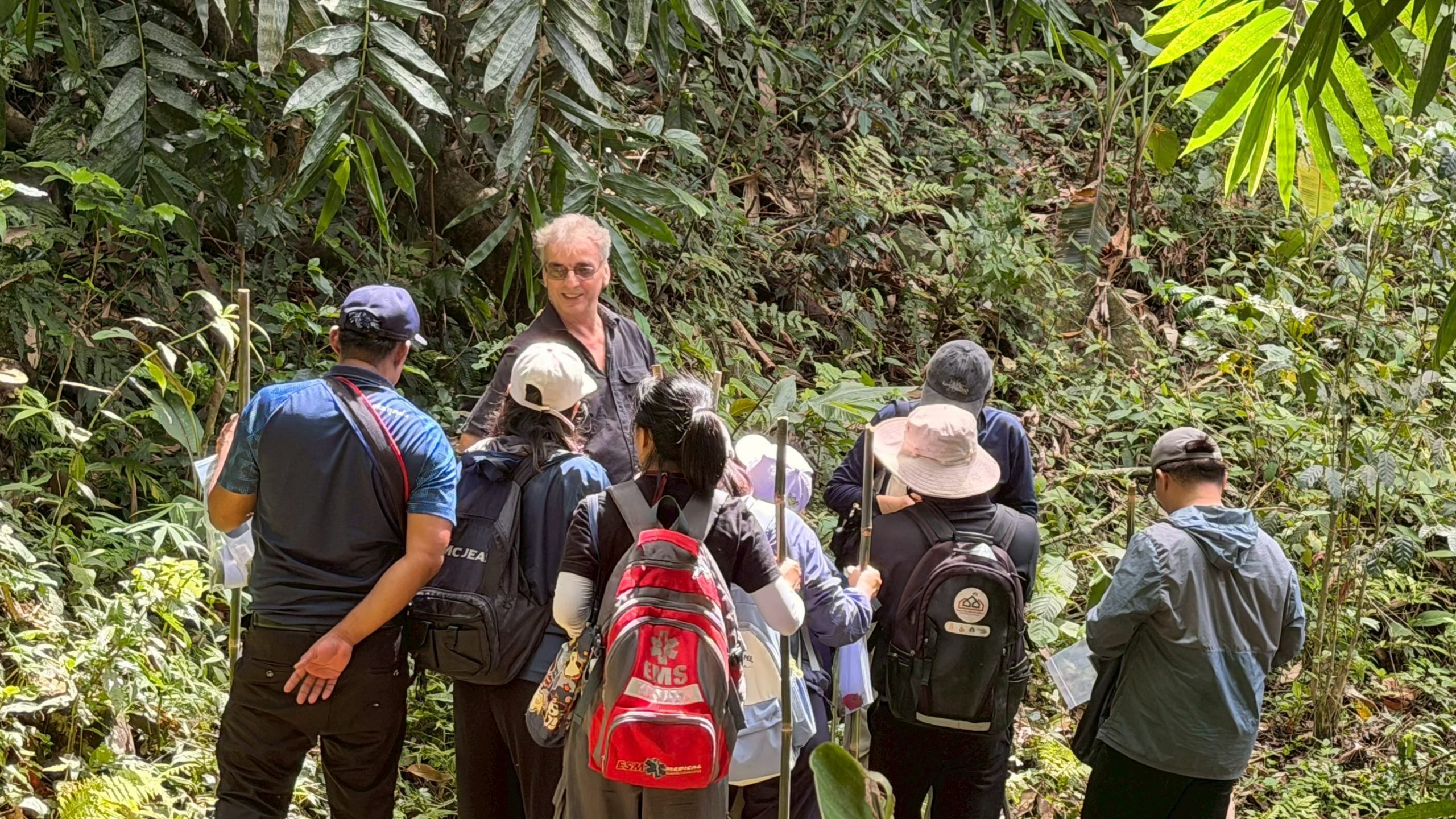
The Living University is not a conventional, degree-granting institution. Instead, it provides an opportunity to learn directly from the experience of the Doi Tung Development Project. Participants visit project sites, listen to community members and learn from development practitioners, field personnel and holders of local wisdom.
The process enables participants to understand the principles and practices of sustainable development from the perspectives of different groups before applying the knowledge to their own organisations, communities or areas of responsibility.
At the heart of the learning experience is an understanding of the processes behind Doi Tung’s transformation. The area once faced poverty, shifting cultivation and severe natural-resource degradation. It has since become a place where people and forests can thrive together.
This transformation was driven by the “Planting Forests, Planting People” approach, which connects environmental restoration with livelihood creation, income generation, community pride and participation throughout the development process.
For today’s organisations, the challenge is no longer simply to conduct occasional social or environmental activities. Sustainability principles must be incorporated into day-to-day operations, from strategy and stakeholder management to the development of successive generations of leaders, the design of social initiatives with tangible benefits and the measurement of outcomes for people, communities and nature.
“Many organisations now have clearer ESG and sustainability targets. The critical question is how to ensure that these commitments do not remain confined to reports, but lead to genuine change on the ground,” Ms Visit-orn said.
“The Living University therefore seeks to turn knowledge from Doi Tung into practical tools that participants can use to develop ideas, design initiatives and take further action. It has translated Doi Tung’s experience into sustainability programmes and learning processes tailored to the needs and circumstances of different audiences and organisations.”
Learning through experience
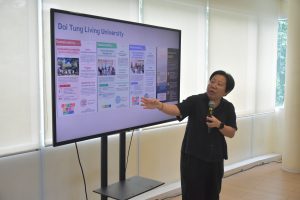
Waraporn Thanasuriyakiat, Manager of the Urban Youth Leadership Development Project at MFLF, said a defining feature of the Living University’s programmes was that participants did not simply listen to lectures.
Instead, they took part in experiential learning through field visits, discussions with practitioners, collective reflection and the application of lessons to challenges faced by their own organisations.
“We do not want participants to leave with ready-made answers. We want them to understand the thinking, the processes and the success factors that enable development to deliver tangible results,” she said.
“The programmes are therefore structured around five elements: Learn, Understand, Engage, Do and Apply. This enables participants to connect lessons from Doi Tung with their own circumstances.
“Doi Tung’s experience shows that sustainability is neither remote from our everyday lives nor the responsibility of any single department within an organisation. It is connected to how everyone thinks, works and makes decisions.
“Through the Living University, we invite organisations and other interested groups to ask themselves how we can live and work in ways that enable people to thrive, nature to survive and organisations to grow with purpose.”
Sustainability programmes for organisations
The Living University’s sustainability programmes allow participants to explore sustainable development principles through real-world case studies. They examine the connections between economic, social and environmental considerations, as well as methods for measuring development outcomes.
Programmes focusing on sustainability leadership and impact are designed for executives, sustainability teams, corporate social responsibility teams, human resources professionals and those responsible for organisational sustainability initiatives.
The programmes help participants understand the role of leadership, stakeholder engagement and the practical implementation of sustainability within an organisation. Participants can apply the knowledge directly to their work or pass it on to other employees.
In the environmental field, the Living University offers programmes based on lessons from waste management at the Doi Tung Development Project. These include Sustainable Waste Management, Zero Waste to Landfill and Community Engagement for Zero-Waste Initiatives.
The programmes help participants understand the root causes of waste, the management of materials throughout the waste system, from source to final destination, and the transition towards a circular economy. They also explore ways to engage communities and organisations in systematically reducing their environmental impact.
Business as a vehicle for positive impact
The Living University’s social enterprise programmes share lessons from the DoiTung social enterprise brand, which operates according to the principle of “Profit with Purpose”.
DoiTung uses market mechanisms alongside job creation and improvements in community well-being. Its experience demonstrates how business can serve as a vehicle for positive economic, social and environmental impact when its model is genuinely connected to the challenges and potential of a particular area.
The Living University also offers sustainability workshops that can be tailored to the needs and circumstances of individual organisations. Topics include ESG, the United Nations Sustainable Development Goals, biodiversity, sustainable leadership, key success factors and other specific sustainability issues.
The workshops employ experiential-learning tools, simulation games, hands-on activities and guided reflection to help participants connect sustainability knowledge more closely with their organisation’s work.
Programmes are also available for children and young people living in urban areas. These introduce young participants to nature as well as biological and social diversity, with the aim of nurturing future leaders who understand sustainability, appreciate the natural world and are prepared to grow while safeguarding nature for future generations.
Through the Living University, lessons from the Doi Tung Development Project are transformed into knowledge and practical tools that organisations can adapt to their own circumstances. The aim is to create lasting change for people, communities, nature and organisations.
Government agencies, businesses and other organisations interested in learning more or discussing the design of sustainability learning programmes tailored to their needs may contact the Sustainable Living Academy at the Mae Fah Luang Foundation under Royal Patronage on 053-767-015-7, extension 23700, or by email at klc@doitung.org.