Mae Fah Luang Foundation Joins Bangkok Climate Action Week 2026 Nine Days of Learning on Zero Waste, Urban Forests and Circular Fashion Bangkok Residents Invited to Take Action for a More Sustainable City

The Mae Fah Luang Foundation under Royal Patronage is joining Bangkok Climate Action Week 2026 (BKKCAW 2026) to bring climate and sustainability issues closer to everyday life and demonstrate how everyone can contribute through practical action. Activities will take place from 3 to 11 October 2026 at the Foundation’s Rama IV office, connecting the public with knowledge and first-hand experience from practitioners through sessions that participants can explore, test and apply. The programme covers integrated waste management, urban green spaces and biodiversity, as well as circular resource use in the fashion industry.

The Foundation is also providing forest carbon credits to support Bangkok Climate Action Week 2026 in meeting its net-zero event target. The credits will be used to offset residual greenhouse gas emissions generated during the nine-day programme after measures have been taken to reduce emissions. The credits originate from the Doi Tung Development Project (Royal Initiative) in Chiang Rai and are certified under the Thailand Voluntary Emission Reduction Program (T-VER). They are generated through forest conservation and restoration carried out alongside the sustainable improvement of local livelihoods.

Across the nine days, the Foundation will host a continuous programme spanning nature-based learning, urban design, waste management and responsible consumption. Activities range from a simulation game on building a resilient community and hands-on exploration of urban wildlife, trees, PM2.5 pollution and local biodiversity, to the design of microforests with partners from Singapore, a Zero Waste systems workshop for individuals and organisations, and exhibitions and activities on circular fashion. Together, the programme aims to translate climate action into practical steps for urban spaces, workplaces and everyday life.

The programme’s highlights, organised with sustainability partners from Thailand and overseas to exchange knowledge and turn climate solutions into action, include:

Bringing global perspectives to sustainable urban design through “Microforests in the City: Cooling through Greening”

The session brings together science, business perspectives and practical experience in nature restoration and design. It draws on lessons from the CDL MicroForest Initiative in Singapore, where small, densely planted urban forests are being implemented and monitored for ecological outcomes. City Developments Limited (CDL), a Singapore-based real estate company, will share business perspectives and implementation experience, while the National University of Singapore (NUS) will contribute expertise on site selection, forest structure, plant species, biodiversity monitoring and local climatic conditions.

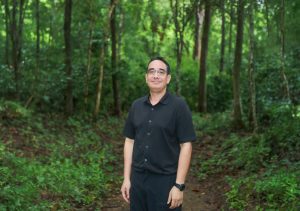
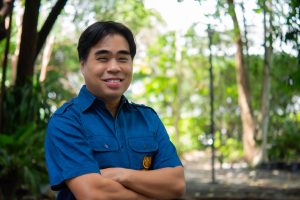
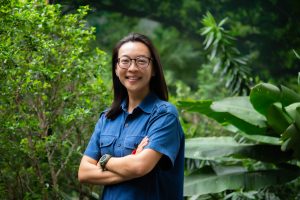
Associate Professor Adrian Loo Hock Beng, Deputy Director of the Centre for Nature-based Climate Solutions at NUS, will join Priscilla Tan of CDL and Supawut Boonmahathanakorn of Wewilding to connect these insights with Thailand’s building and urban design context. Participants will then design a 500-square-metre vacant plot in Bangkok as a microforest that can provide shade, reduce heat, support biodiversity and improve urban quality of life—demonstrating that even limited urban space can bring nature back into the city in a measurable and lasting way.

Exploring comprehensive solutions to the waste challenge through “Waste Moves Forward: Zero Waste to Landfill Is Possible”

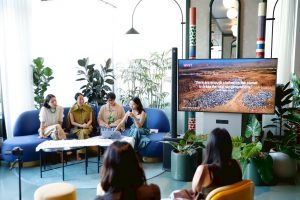
This panel discussion and workshop will take participants beyond basic waste sorting to learn how to plan and design an integrated waste management system, from the individual level to large organisations. The discussion will feature Pornprom Vikitsreth, Deputy Governor of Bangkok, who is advancing Bangkok’s transition towards more circular waste management, and Dr Thanapong “Jack” Duangmanee, Director of Environmental Policy at the Mae Fah Luang Foundation, who has worked in waste management for nearly two decades and helped shape the system at the Doi Tung Development Project.

Covering more than 90,000 rai, the project has maintained zero waste to landfill since 2018. The session will be moderated by Chanut “Kong” Wudhiwigaigarn, environmental content creator and founder of KongGreenGreen, who makes complex waste issues accessible and actionable.

Extending sustainability into contemporary products through the DoiTung and DOITUNG EVERYDAY social enterprise brands

The brands translate resource efficiency, circularity and the creation of sustainable livelihoods for local communities into contemporary products, from handicrafts that build on local skills and wisdom to products made from recycled and surplus materials. The products demonstrate how everyday consumption can contribute to an economy that values both people and the environment.

During Bangkok Climate Action Week 2026, visitors can explore the products, with special offers available from 3 to 11 October 2026 at the Mae Fah Luang Foundation’s Rama IV office.

For programme updates and registration, visit Climate Playground or follow Mae Fah Luang Foundation under Royal Patronage and DoiTung Club on Facebook.

Programme Schedule

3–11 October 2026 | Mae Fah Luang Foundation under Royal Patronage, Rama IV Office, Bangkok

Saturday, 3 October 2026

  • 3.00–4.00pm Sustainable Settlement Game: Build, Give, Grow — A simulation game on building communities that can adapt to change and grow sustainably.
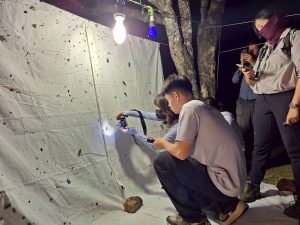
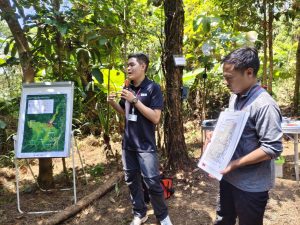
  • 4.00–5.00pm Secrets of Nature: Urban Wildlife — Explore urban biodiversity through a game that traces signs of animals living in the city.

Sunday, 4 October 2026

  • 3.00–4.00pm Doi Tung’s Biodiversity Cards: Connected by Nature — Discover biodiversity through cards presenting nature from the perspectives of young people in Doi Tung.
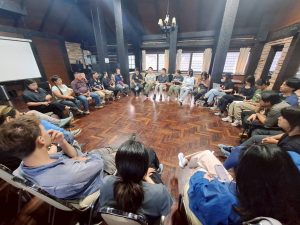
  • 2.00–5.00pm Microforests in the City: Cooling through Greening — Explore lessons from the CDL MicroForest at City Square Mall, a compact forest beside a shopping centre in central Singapore that helps reduce heat and support biodiversity. Experts from the National University of Singapore (NUS) and City Developments Limited (CDL), together with Supawut Boonmahathanakorn of Jai Baan Studio, will lead a workshop in which participants redesign a 500-square-metre vacant plot in Bangkok as an urban microforest. Open to the general public.
  • 4.00–5.00pm Secrets of Nature: Trees and PM2.5 — Test the ability of leaves to capture particulate matter and learn how trees support urban air quality.


Monday, 5 October 2026

  • 9.30am–12.00pm “Waste Moves Forward: Zero Waste to Landfill Is Possible” — A panel discussion and workshop on planning and designing integrated waste management systems for individuals and large organisations. Featuring Pornprom Vikitsreth, Deputy Governor of Bangkok, and Dr Thanapong “Jack” Duangmanee, Director of Environmental Policy at the Mae Fah Luang Foundation. Moderated by Chanut “Kong” Wudhiwigaigarn, founder of KongGreenGreen.
  • 2.00–5.00pm Microforests in the City: Cooling through Greening — An in-depth workshop on creating urban microforests, from site and plant selection to maintenance and impact measurement. Led by experts from NUS and CDL, together with Supawut Boonmahathanakorn of Jai Baan Studio, the workshop is designed for landscape practitioners, architects and organisations seeking ideas that can be applied to buildings and urban spaces.


Tuesday, 6 October 2026

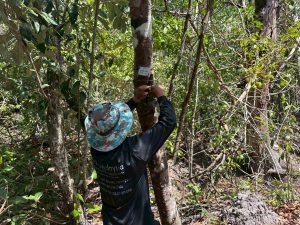
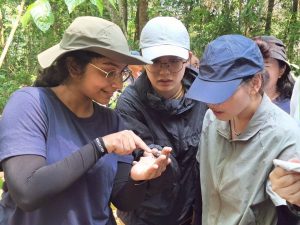
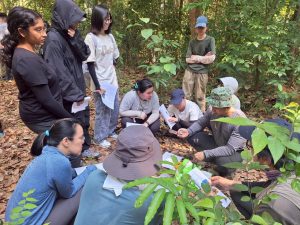
  • 3.00–4.00pm Secrets of Nature: Biodiversity Collection — Survey and record living organisms within a 1 x 1 metre plot to discover biodiversity in the small spaces around us.


Wednesday, 7 October 2026

  • 4.00–5.00pm When Nature Falls Silent: The Disappearing Sounds — Listen to natural sounds that are fading away and explore ecological change with “Mhadiew”, a naturalist and nature sound recordist.


Thursday, 8 October 2026

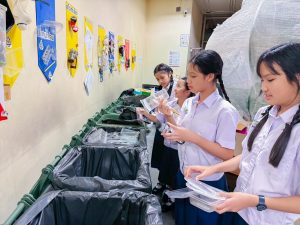
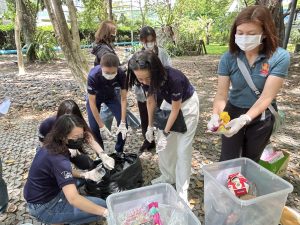
  • 2.00–4.30pm Zero Waste Management Workshop — Practise sorting and analysing waste, design a waste management system, and develop a plan to reduce waste sent to landfill for individuals and organisations.


Friday, 9 October 2026

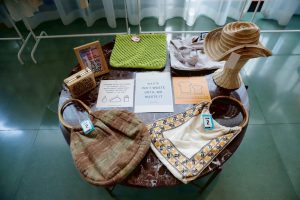
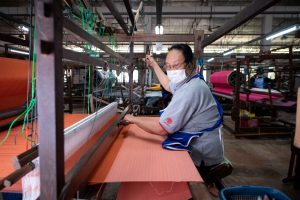
  • Every Shade of Joy Exhibition — Explore the many possibilities of climate action through the creation of new value from handwoven and deadstock fabrics, woven into the lives of women artisans in Doi Tung. The exhibition presents Everyday Joy as a key to sustaining climate action and will remain open from 9 to 11 October 2026.
  • 4.00–5.00pm Secrets of Nature: Opening Sense — Engage the senses to explore and discover urban nature through the everyday world around us.


Saturday, 10 October 2026

  • 1.30–2.30pm Talk: Every Shade of Fashion — Explore alternatives for the fashion industry, moving from the “take–make–dispose” model towards circular resource use. Speakers: Kamonnart “Ong” Ongwandee of Fashion Revolution; Amorpol “Pol” Huvanandana of Moreloop; and Cavina Willson of Sustainable Fashion Week UK.
  • 1.30–6.00pm Clothes and Book Swap — Bring good-quality clothes and books to exchange, reduce new purchases and extend their useful life.
  • 3.00–4.00pm Sustainable Settlement Game: Build, Give, Grow — A simulation game on building communities that can adapt and grow sustainably.
  • 3.00–4.00pm Doi Tung’s Biodiversity Cards: Connected by Nature — Discover biodiversity through the perspectives of young people in Doi Tung.
  • 3.00–5.00pm Workshop: A Frame Full of Joy — Imagine your version of a world filled with Everyday Joy and create a photo-frame collage from deadstock fabric, photographs and everyday objects, while exchanging ideas with a green community.


Sunday, 11 October 2026

  • 1.30–6.00pm Clothes and Book Swap — Pass good-quality clothes and books on to new owners, reduce consumption-related waste and make better use of resources.
  • 2.00–2.30pm Chao Khun Thong and Friends — The much-loved Thai puppet characters, familiar to children for more than three decades, invite families to enjoy stories and learn about caring for nature and the environment.
  • 3.00–5.00pm Workshop: A Frame Full of Joy — Create a photo-frame collage from deadstock fabric, photographs and everyday objects, and discuss how to keep our world liveable with a green community.
PTT Group and Mae Fah Luang Foundation join forces to support Thailand’s Net Zero goal.

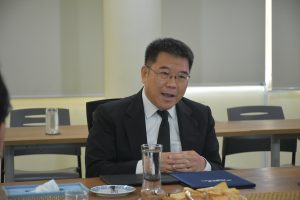
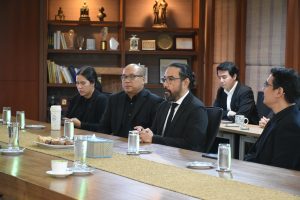
Dr. Buranin Rattanasombat The Chief Operating Officer of New Business and Sustainability Group, PTT Public Company Limited, presided over the signing ceremony of a Memorandum of Understanding on cooperation in the conservation and restoration of natural resources through community participation mechanisms for sustainable development between PTT Group and the Mae Fah Luang Foundation under Royal Patronage. This aims to enhance forest conservation and restoration while simultaneously improving the quality of life for communities. M.L. Dispanadda Diskul Secretary and Chief Executive Officer, Mae Fah Luang Foundation. Mr. Rattakorn Kampanatsanyakorn Deputy Managing Director of Corporate Sustainability, PTT Public Company Limited Mr. Theodkiat Prommoon Chief Executive Officer and President of IRPC Public Company Limited. M.L.Pingthong Thongyai Chief Executive Officer, PTT Oil and Retail Public Company Limited  Mrs. Susama Pitakuldilok Assistant to Senior Vice President, Sustainability and Stakeholder Management, PTT Exploration and Production Public Company Limited. Ms. Parinda Maimjai Senior Vice President, Corporate Administration, Global Power Synergy Public Company Limited. Dr. Itthipol Diaowanich Senior Vice President, Corporate Governance and Sustainability, Thai Oil Public Company Limited.  Mr. Krit Trinuchakorn Assistant to the Senior Vice President, Corporate Governance and Legal Affairs, PTT Global Chemical Public Company Limited, and Mr. Wisan Kaewprasom The Acting Managing Director of PTT LNG Company Limited participated in the signing ceremony.


This collaboration aims to care for and restore forests under the “Planting Forests, Planting People” approach, promoting community participation in managing forests as carbon dioxide sinks and creating quality carbon credits to support the country’s Net Zero goal. This builds upon the success of PTT Group and the Mae Fah Luang Foundation since 2566, which has yielded tangible results in community forest restoration, reducing wildfire damage, systematic waste management, and empowering communities to effectively manage and care for natural resources. This reinforces the shared growth of the economy, society, and the environment.

TOA advances Green Mission with Mae Fah Luang Foundation to restore forests and build carbon sinks Partnership aims to improve community livelihoods and support Net Zero 2050 target

Amid the escalating challenges of climate change, forest loss and greenhouse-gas emissions, the business sector’s role extends beyond reducing the impacts of its own operations. Companies must also contribute to ecosystem restoration and create long-term shared value for society.

TOA Paint (Thailand) Public Company Limited, or TOA, a leading Thai manufacturer of paints, construction chemicals and surface-finishing materials, is advancing its Green Mission policy through Green Reforestation, one of its seven core strategies.

The strategy, introduced in 2023, supports Thailand’s environmental goals and efforts to reduce greenhouse-gas emissions through tangible action.

TOA has now announced a partnership with the Mae Fah Luang Foundation under Royal Patronage (MFLF) under the Forest Carbon Credit Management for Sustainable Development Project.

The collaboration will support the systematic conservation, restoration and management of community forests while developing effective carbon sinks, generating income and sustainably improving the quality of life of participating communities.

The wider programme covers 111 communities in five provinces — Chiang Rai, Chiang Mai, Tak, Yasothon and Amnat Charoen. TOA will support project activities covering a combined 6,000 rai.

The partnership will encourage local communities to take an active role in protecting forests from encroachment, degradation and the impacts of climate change. It will also strengthen their capacity to manage natural resources independently over the long term.

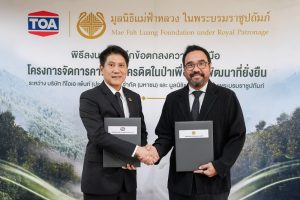
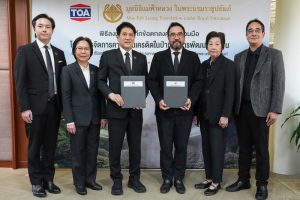
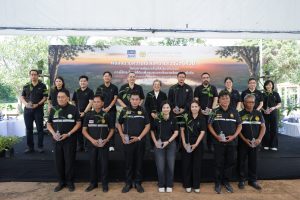
The memorandum of understanding was signed by Jatuphat Tangkaravakoon, Chief Executive Officer of TOA, and M.L. Dispanadda Diskul, Secretary-General and Chief Executive Officer of the Mae Fah Luang Foundation under Royal Patronage.

The signing was witnessed by Wipada Nakpairat, Vice President of the SHE & Quality Management and Sustainability Division; Noppakhun Panyasermsuk, Head of Marketing at TOA Paint (Thailand) Public Company Limited; and Smitthi Harueanphuech, Chief Nature Based Solutions Officer at the Mae Fah Luang Foundation.

The ceremony was held at the Mae Fah Luang Foundation’s Bangkok office.

Mr Jatuphat said the partnership reflected TOA’s commitment to conducting business alongside tangible environmental action.

The company gives as much importance to developing natural carbon sinks as it does to reducing greenhouse-gas emissions from its business operations, he said.

TOA believes that meeting climate targets requires action on both sides of the equation — reducing emissions and removing greenhouse gases from the atmosphere.

Since 2023, TOA has been restoring forest areas in Loei and Udon Thani provinces under its “TOA Loves Us, Loves the Planet — Restoring Forests and Ecosystems Sustainably” initiative.

The initiative seeks to expand green areas, restore biodiversity and rebuild healthy ecosystems, while encouraging local communities to participate in managing their natural resources.

The partnership with the Mae Fah Luang Foundation represents another important step in strengthening TOA’s Green Reforestation strategy, one of the seven pillars of its Green Mission policy.

The strategy supports the company’s goal of achieving net-zero greenhouse-gas emissions by 2050 by increasing carbon-dioxide absorption capacity and helping restore the balance of Thailand’s ecosystems.

“For TOA, reforestation is not simply about increasing the number of trees. It is an investment in creating sustainable ecosystems for the country,” Mr Jatuphat said.

He added that the project’s central objective went beyond restoring forests and expanding carbon sinks. It also sought to establish a sustainable balance between people and forests, allowing both to grow and support one another.

TOA also aims to create shared value for participating communities by encouraging local people to take part in managing and protecting natural resources.

The project will support livelihoods and generate income through environmentally responsible activities. This is intended to improve people’s quality of life, strengthen grassroots economies and provide long-term incentives for communities to conserve forest resources.

The approach is expected to support sustainable growth shared by businesses, communities and the environment.

M.L. Dispanadda said the partnership with TOA provided further evidence that Thailand’s private sector could make a tangible contribution to tackling climate change.

Drawing on the experience accumulated through the Doi Tung Development Project, an area for royal development in Chiang Rai, the Forest Carbon Credit Management for Sustainable Development Project addresses more than climate mitigation.

It also improves the quality of life of local communities and contributes to biodiversity conservation in community forests.

M.L. Dispanadda said the project’s success depended on strong cooperation between the Foundation and private-sector partners such as TOA, which recognised the importance of national environmental challenges and shared the belief that people and nature could genuinely thrive together.

The Mae Fah Luang Foundation advances sustainable development through four interconnected areas of work.

The first is area-based development, which adopts an integrated approach to improving community well-being.

The second is social enterprise, which creates stable livelihoods and sustainable income through the DoiTung brand.

The third is Nature-based Solutions, which improve community livelihoods while protecting and restoring natural resources.

The fourth is sustainability advisory services, through which the Foundation applies knowledge gained from practical field experience to collaborations with other organisations, generating measurable positive impacts at a broader scale.

The partnership with the Mae Fah Luang Foundation marks another important step in TOA’s journey towards net zero.

It also reinforces the role of the private sector in restoring healthy ecosystems, reducing the impacts of climate change and preserving abundant natural resources for future generations.

Mae Fah Luang Foundation advances community forest carbon credits Ban Hua Thung showcases a carbon-credit model in Doi Chiang Dao Biosphere Reserve where forests recover and communities thrive

Following its delivery of 43,123 tonnes of carbon dioxide equivalent in Phase 1 carbon credits — the largest single handover of credits from forest conservation and restoration projects in Thailand to date — the Mae Fah Luang Foundation under Royal Patronage (MFLF) is continuing to advance its community-centred forest carbon-credit model.

The credits were generated under the “You Look After the Forest, We Look After You: Forest Carbon Credit Management for Sustainable Development” programme, which has operated since 2021 and initially covered 12 projects in four northern provinces.

They were transferred to seven private-sector organisations during the MFLF Sustainability Forum 2025, held under the theme “Global Challenges, Local Solutions at Scale” at the Queen Sirikit National Convention Center in Bangkok in September 2025.

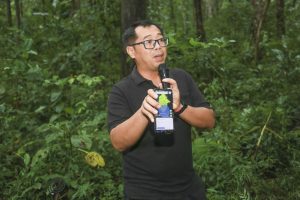
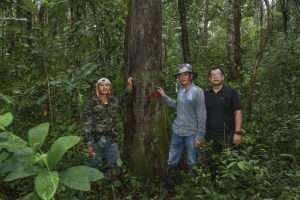
More recently, the Foundation organised a field visit to the Forest Carbon Credit Management for Sustainable Development programme, accompanied by discussions with representatives of community-forest networks in northern Thailand.

The visit highlighted the economic, social and environmental outcomes of participatory forest management over the past five years.

The programme has expanded to more than 300 community forests covering over 287,000 rai nationwide. It has significantly reduced areas damaged by wildfires in its earliest project sites and channelled more than 157 million baht into community-managed funds.

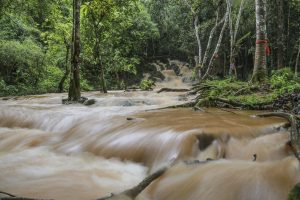
The visit also showcased Ban Hua Thung in Chiang Dao district, Chiang Mai, as a case study. Located within the Doi Chiang Dao Biosphere Reserve, the community is home to Nam Ok Hu, a water source connected to the Ping River basin.

Led by a woman village head, the community has demonstrated how forest stewardship can become a legitimate, transparent, measurable and verifiable source of employment. Its work generates shared value for the public sector, businesses and communities while supporting Thailand’s net-zero and biodiversity-conservation goals.

Community-centred carbon credits

Smitthi Harueanphuech, Head of Nature Based Solutions & Special Projects at the Mae Fah Luang Foundation, said the programme had developed a community-centred carbon-credit model that addressed forest conservation and people’s livelihoods at the same time.

The initiative was launched in 2021 under the Thailand Voluntary Emission Reduction Program, or T-VER, administered by the Thailand Greenhouse Gas Management Organization (Public Organization), or TGO.

It builds on the “Planting Forests, Cultivating People” model developed through the Doi Tung Development Project, whose achievements have gained international recognition, and extends the approach to community forests across Thailand.

The programme now covers more than 287,000 rai managed by over 300 communities in 12 provinces across the North, Northeast, Central Plains and South.

More than 150,000 people participate in the programme, which is supported by over 30 private companies and state enterprises.

Field-based indicators demonstrate tangible results. In project areas participating in Phases 1 and 2, the proportion of land damaged by wildfires fell from an average of 12% to 4% in 2024. In Phase 3 areas, the figure declined from 8% to 3%.

The results reflect the effectiveness of year-round community forest management, both during and outside the annual fire season.

Communities own the rules, data and benefits

The programme is built around the principle that communities should own “the rules, the data and the benefits”.

Financial support from programme partners and carbon-credit buyers is channelled to villages through two funds.

The Forest Stewardship Fund supports conservation, forest restoration and wildfire prevention and mitigation. Activities include constructing firebreaks, conducting patrols, building check dams and planting or restoring forests.

The Sustainable Development Fund supports grassroots livelihoods and helps reduce pressure on natural resources.

More than 157 million baht has circulated through the two funds. Participating communities develop their own plans, submit project proposals, monitor implementation and report the results.

The Foundation serves as a technical mentor, providing support on standards, measurement, reporting and verification, or MRV, as well as governance.

This structure helps turn forest stewardship into legitimate employment that improves people’s quality of life while extending the life and ecological integrity of the forests.

Transparent and verifiable data

To ensure the quality and integrity of the carbon credits, the programme uses field sample plots established in accordance with T-VER requirements.

Field data are combined with interpreted imagery showing forest types and canopy density. Conditions at the beginning of each project are compared with those recorded after participation to assess carbon sequestration and avoided greenhouse-gas emissions in community forests.

The process makes the information transparent and independently verifiable while creating a foundation for future carbon-credit certification.

It also preserves a central principle of the programme: the people who perform the work should receive a fair share of the benefits.

Ban Hua Thung: a community within a biosphere reserve

Ban Hua Thung in Chiang Dao district provides a clear example of the model’s results.

The community is located within the Doi Chiang Dao Biosphere Reserve and is the source of Nam Ok Hu, which feeds into the Ping River system.

Ban Hua Thung joined the Foundation’s forest carbon-credit programme in 2022 and manages 883.93 rai of community forest. Its participation has produced tangible environmental benefits while strengthening the local economy.

The work is led by Siriwan Sringoen, the woman village head of Ban Hua Thung, who has brought together community members of all ages and established clear roles and governance arrangements.

The community has introduced rules governing forest use, organised patrol schedules, constructed firebreaks and collected data from sample plots alongside technical teams.

These efforts have enabled the forest to recover continuously, significantly reduced wildfire risks and strengthened the security of the upstream ecosystem, generating benefits for communities throughout the Ping River basin.

Income from protecting forests

A defining feature of Ban Hua Thung is that local income is generated not by encroaching on forests, but by protecting them and adding value to traditional knowledge.

Funding from the programme has created employment in forest stewardship and supported the development of community products that add value to locally available resources.

Waste bamboo left over from basketry, for example, is converted into charcoal and subsequently developed into deodorising blocks, shoe trees, soap and toothpaste.

These activities provide supplementary income for older people, people with disabilities and disadvantaged members of the community.
The model has also been extended to five neighbouring villages, where communities have shared livelihood skills including mushroom cultivation, beekeeping, local food production and basketry.

The expansion gives younger residents opportunities to build careers in their home communities without placing additional pressure on forests. It also fosters a shared sense of pride in their role as “guardians of the watershed”.

Wider environmental benefits

The experience of Ban Hua Thung and its surrounding network demonstrates that proactive prevention can significantly reduce wildfires.

This lowers the risk of PM2.5 pollution caused by forest fires and prevents the loss of carbon stored in trees and soil.

Recovering forests also protect biodiversity and provide essential ecosystem services. These include absorbing rainfall, reducing soil erosion and maintaining the quality of the country’s water resources.

When upstream forests are healthy, natural-resource-based economies that depend on water become more resilient. The benefits extend to farmers, tourism operators and downstream towns requiring reliable supplies of clean water.

These are public benefits shared across the country, rather than benefits limited to buyers of carbon credits.

A fair incentive for conservation

From the perspective of community economics, carbon credits serve as a “fair incentive” rather than merely a mechanism through which companies offset their carbon footprints.

Prices in Thailand’s voluntary carbon market vary according to factors including the vintage year, the quality and integrity of the underlying data, and the terms agreed between buyers and sellers.

In carbon markets, the vintage year refers to the year in which the emissions reduction or carbon removal represented by a credit took place. It is one of several factors that can influence the trading price of the credit.

At the time of the programme’s field visit, publicly available reference prices for comparable credits were around 2,000 baht per tonne of carbon dioxide equivalent, although actual transaction prices depended on credit characteristics and individual agreements.

When credits are sold, the community’s share of the revenue is returned to the two funds to finance continuing forest-management employment and livelihood development.

This creates a cycle of “money, jobs and forests” within the community, enabling conservation activities to become financially sustainable over the long term.

The Forest Carbon Credit Management for Sustainable Development programme offers a tangible model of the kind of carbon-credit system Thailand is seeking — one firmly connected to the lives of local people.

It protects watersheds, creates employment, stimulates grassroots economies and provides cleaner air and water for the wider public.

Ban Hua Thung is therefore more than a successful community-forest case study in Chiang Dao. It demonstrates that when rules and incentives are designed fairly, carbon credits can become a bridge connecting healthy forests, a more equitable society and a sustainable economy — contributing to genuine total well-being.

Mae Fah Luang Foundation advances biodiversity through natural capital Building on natural assets to create sustainable economic value

To mark the International Day for Biological Diversity, observed globally on May 22, the Mae Fah Luang Foundation under Royal Patronage (MFLF) has reaffirmed its role as a model organisation for sustainable development built around people and nature.

The global theme for 2026, “Acting locally for global impact”, underscores the importance of turning action on the ground into broader results. The theme aligns with the Foundation’s approach of elevating conservation and community development into the creation of “natural capital” capable of generating tangible economic value, opportunities and sustainable development.

This work brings together scientific knowledge, private-sector collaboration and biodiversity policy at both national and international levels.

Smitthi Harueanphuech, Chief Nature Based Solutions Officer at the Mae Fah Luang Foundation, said biodiversity was not merely an environmental issue but a fundamental pillar of the economy, business and people’s quality of life.

Amid the growing global nature crisis, the Foundation is building on almost four decades of field experience, particularly its “Planting Forests, Cultivating People” approach, to advance biodiversity through three principal strategies.

The first is the application of Nature-based Solutions (NbS). The second is participation in national and international biodiversity initiatives, while the third involves extending the Foundation’s knowledge and expertise to businesses through advisory services.

Nature-based solutions rooted in 38 years of experience

The first strategy builds on the achievements of the “Planting Forests, Cultivating People” approach implemented through the Doi Tung Development Project, an area for royal development in Chiang Rai, over the past 38 years.

Covering 91,779 rai, the project is home to a nationally significant biodiversity database. Surveys have recorded 1,459 plant species, including 12 species newly discovered by science, such as Nakharinthara, Thian Doi Tung and Muang Payap.

A total of 1,177 wildlife species have also been documented, including eight endangered species such as the serow and the big-headed turtle.

These findings demonstrate that the Foundation’s approach of caring for people and nature together can restore ecosystem abundance, benefit all forms of life — particularly local communities — and enable people to coexist sustainably with forests.

The escalating impacts of climate change are also beginning to affect development efforts, including community agriculture and productivity, ecosystems and exposure to natural disasters.

The Foundation has therefore begun studying and advancing the management of nature-related risks to prepare communities and ecosystems for long-term impacts.

Advancing biodiversity at national and international levels

Thanit Kongkaew, Director of Sustainability at the Mae Fah Luang Foundation, said the Foundation was committed to supporting Thailand’s National Biodiversity Strategy and Action Plan (NBSAP).

This work is being pursued through partnerships and memoranda of understanding with the Office of Natural Resources and Environmental Policy and Planning (ONEP), the Biodiversity-Based Economy Development Office (Public Organization), or BEDO, and the National University of Singapore (NUS).

The collaborations are intended to help the Foundation’s development projects serve as models for the sustainable conservation and restoration of biodiversity.
The Foundation is also working towards having Doi Tung recognised as an Other Effective Area-based Conservation Measure, or OECM.

The initiative supports the global 30×30 target, which calls for the effective conservation and management of at least 30% of the world’s terrestrial, inland water, coastal and marine areas by 2030.
At the same time, the Foundation and BEDO are studying a biodiversity-credit mechanism based on the Terrasos standard developed in Colombia.

The Foundation is also preparing to present its community-based working model at the 17th meeting of the Conference of the Parties to the Convention on Biological Diversity, or CBD COP17, to be held in Yerevan, Armenia, from Oct 19–30, 2026.

The presentation will highlight Thailand’s potential to serve as a regional model for community-centred biodiversity conservation.

Expanding biodiversity studies across Thailand

Beyond the Doi Tung Development Project in Chiang Rai, the Foundation is extending its biodiversity research to other areas across Thailand.

One initiative involves developing a biodiversity database and conducting an economic valuation of 10,832 rai of targeted mangrove forests in Trang province.

The two-year project, running from December 2025 to November 2027, brings together organisations with expertise in mangrove ecosystems. They include the Mae Fah Luang Foundation, the Department of Marine and Coastal Resources, Chulalongkorn University, Rajamangala University of Technology Srivijaya, the Office of the Royal Development Projects Board and PTT Exploration and Production Public Company Limited.

The Foundation is also conducting feasibility studies on registering 11 community forests participating in the Carbon Credit Management in Forests for Sustainable Development Project as OECMs.

The work is supported by 1.5 million baht in funding from the High Ambition Coalition for Nature and People. It is expected to strengthen the role of local communities in the long-term conservation of natural resources and biodiversity.
Extending biodiversity expertise to business

The third strategy focuses on scaling up the Foundation’s experience and transferring its knowledge to the private sector through advisory services.

The Foundation has developed a Biodiversity Advisory Service for businesses seeking to restore ecosystems in areas where they operate.

Examples include a rewilding project in Chon Buri and the development of water-management systems in Chiang Dao. These initiatives place an emphasis on measurable and tangible environmental outcomes.

The Mae Fah Luang Foundation believes that combining scientific knowledge with the local wisdom accumulated through 38 years of field experience offers an important pathway for both the economy and the planet.

Its work today is therefore not simply about demonstrating past achievements. It is about building future ecosystems in which people, forests and businesses can grow together in a balanced and sustainable manner.

Doi Tung Development Project at 38: Thailand’s living model of environmental sustainability From denuded hills to a “sustainability model” studied and adapted worldwide

To mark World Environment Day on June 5, as the world faces worsening environmental crises, climate change and biodiversity loss, the Doi Tung Development Project (Area for Royal Development) in Chiang Rai has reaffirmed its role as one of Thailand’s leading models of sustainable development.

Operated by the Mae Fah Luang Foundation under Royal Patronage (MFLF), the project has demonstrated that successful environmental restoration requires a comprehensive approach — one that addresses people’s living conditions, creates viable livelihoods, manages natural resources and enables communities to participate in shaping the future of their own areas.

Over nearly four decades, Doi Tung has been transformed from denuded mountains affected by narcotic-crop cultivation, shifting agriculture and the depletion of natural resources into an area where more than 90% of the forest has been restored.

The transformation has been achieved through land-use planning that enables communities and forests to coexist, alongside biodiversity restoration, zero-waste-to-landfill management, water stewardship, renewable energy and energy-efficiency measures, the reuse of production residues, carbon-credit development that benefits local communities and the cultivation of a new generation of environmental stewards.

These efforts have turned the Doi Tung Development Project into a “sustainability model”, an environmental learning destination and a development case study that attracts thousands of visitors from Thailand and overseas each year.

Knowledge and experience developed in the project area have also been extended through sustainability advisory services for organisations seeking to advance their own environmental, social and sustainable-development initiatives.

Dr. Thanapong Duangmanee, Director of Environmental Policy at the Mae Fah Luang Foundation under Royal Patronage, said the most important lesson from Doi Tung was that protecting forests required an understanding of the lives of the people who depended on them.

“If we want to protect forests, we must understand the lives of the people who live alongside them,” Dr. Thanapong said.

“Sustainable conservation does not mean completely prohibiting people from using natural resources. It means designing a system that allows people to use those resources in moderation, responsibly and with a shared understanding of the long-term benefits.

“Today, the Foundation’s environmental work goes beyond forest restoration. It encompasses waste, water, energy, carbon and biodiversity management, as well as the development of young people who understand the value of natural resources. Environmental sustainability can only be achieved when communities themselves take ownership of the change.”

People and forests coexist as ecosystems recover

The success of the Doi Tung Development Project stems partly from the clear allocation of land for different purposes, including conservation forests, economic forests, community-use forests, farmland and residential areas.

This approach provides communities with livelihoods, income and a defined role in managing natural resources. When people have viable livelihood alternatives, pressure on natural forests declines, allowing ecosystems to recover over time.

Biodiversity is also an important indicator of a forest’s recovery. The project therefore places strong emphasis on the conservation, restoration and continuous monitoring of plants, wildlife, water sources and surrounding ecosystems. The information collected serves as a foundation for long-term planning that allows people, forests and natural resources to coexist.
Zero waste to landfill

Waste management within the Doi Tung Development Project is guided by the principle that waste should not end up in landfill. The project has achieved zero waste to landfill since 2018, despite encompassing offices, factories, restaurants, cafés, a hotel, tourist attractions, communities and schools, while welcoming approximately 500,000–600,000 visitors annually.

About 102.4 tonnes of waste are managed each year.

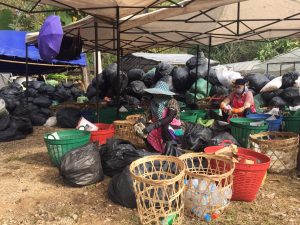
The system begins with waste separation at source into six categories: recyclable, biodegradable, hazardous, general, infectious and other waste.

Each category is then managed appropriately. Materials may be reused, converted into animal feed, transferred to licensed waste-management companies or used as an energy source.

This approach turns waste into a resource through an integrated management system. It has also been extended to 29 villages in the project area, helping households, schools and communities reduce the volume of waste requiring disposal.

Water management

The Doi Tung Development Project’s water-management approach covers efficient consumption, treatment, reuse and continuous water-quality monitoring at several locations.

These include the Foundation’s Bangkok office, Doi Tung Lodge, the Handicraft Production and Distribution Centre, the dyeing facility, the mulberry-paper facility and macadamia plantations.

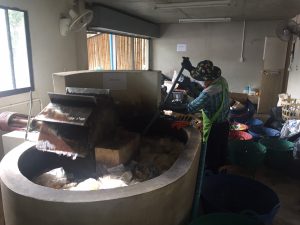
Measures include removing colour from wastewater generated by dyeing processes and reusing treated water for appropriate activities. This helps reduce demand for fresh water, ease pressure on natural water sources and enable economic activities to proceed alongside the protection of upstream ecosystems.

Renewable energy and measurable savings

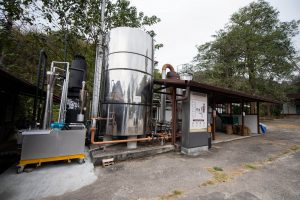
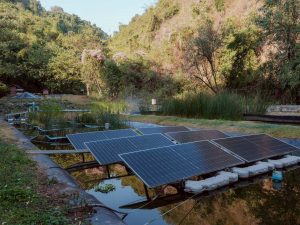
The project uses renewable energy and energy-conservation measures suited to the operations of each facility. These include solar-panel installations, a gasification system using bamboo charcoal made from bamboo affected by mass flowering and die-off, biomass-powered hot-water systems for boiling, bleaching and dyeing textiles, and biodiesel production to reduce fossil-fuel consumption.

Together, these measures reduce greenhouse-gas emissions by approximately 163.3 tonnes of carbon dioxide equivalent annually and cut energy costs by more than 1.46 million baht a year.

The results demonstrate that carbon reductions can begin with the appropriate use of locally available resources, with outcomes clearly measured in terms of both environmental impact and operating costs.

Turning production residues into new resources

Circular-economy products developed under the DoiTung brand provide another example of how production residues can be turned into valuable resources.

Scraps and by-products from handicrafts, textiles, ceramics, coffee and macadamia production are reused in products, manufacturing processes and biomass energy generation. Wastewater from the dyeing facility is also treated and reused.

These practices have earned DoiTung several circular-economy and environmental certifications and labels. They include the Circular Economy Performance Assessment System (CEPAS) developed by the Department of Primary Industries and Mines; the Circular Economy Management System for Business (CEMS), certified by Bureau Veritas; and ISO 14001 environmental management system certification by CCQM (Con Cert Quality Management GmbH).

DoiTung scarves and coffee products have also been registered for the Carbon Footprint of Product (CFP) label issued by the Thailand Greenhouse Gas Management Organization (Public Organization), while its coffee capsules have received the Circular Mark from the Thailand Environment Institute Foundation.

Carbon credits must benefit communities

The Mae Fah Luang Foundation develops carbon credits as a mechanism for translating the environmental value of community-managed forests into economic benefits and long-term incentives for conservation.

A total of 57,480 rai within the Doi Tung Development Project has been registered under the Thailand Voluntary Emission Reduction Program, or T-VER. The area has generated 419,513 tonnes of carbon dioxide equivalent in carbon credits.

Knowledge gained from this work has been extended through the Carbon Credit Management in Forests for Sustainable Development Project, which expands cooperation with community forests across Thailand.

Young people as future stewards of natural resources

Recognising that young people will play a critical role in the future management of natural resources, the Doi Tung Development Project continuously promotes environmental awareness among younger generations in the area.

Activities include science fairs, energy and environmental exhibitions, the “Renewable Energy for a Low-Carbon Future” programme and the Doi Tung Young Guardians network.

The network gives local young people opportunities to learn, take action and communicate environmental issues within their communities.

From denuded mountains to regenerated forests, and from communities once deprived of opportunities to communities with stable livelihoods and an active role in managing natural resources, Doi Tung has become a “living model” demonstrating that sustainable development is possible when people and nature are enabled to thrive together in long-term balance.

NSTDA’s MTEC and Mae Fah Luang Foundation launch community biochar pilot Five-year partnership aims to reduce PM2.5 pollution and generate income from agricultural residues

BANGKOK, June 22, 2026 — The National Metal and Materials Technology Center (MTEC), under the National Science and Technology Development Agency (NSTDA), and the Mae Fah Luang Foundation under Royal Patronage (MFLF) have signed a memorandum of understanding to develop a community-level pilot project producing biochar from agricultural residues.

The agreement, signed at the MFLF’s Bangkok office, aims to promote the sustainable management of agricultural residues, reduce air pollution and create new economic opportunities for local communities.

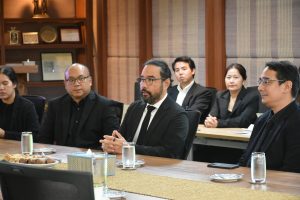
The signing ceremony was attended by M.L. Dispanadda Diskul, Secretary-General and Chief Executive Officer of the MFLF, and Assoc. Prof. Dr. Toemsak Srikhirin, Executive Director of MTEC, together with executives and project teams from both organisations.


Assoc. Prof. Dr. Toemsak said the partnership would bring MTEC’s expertise and technologies in materials and environmental science into practical use at the community level.

“The project is intended to establish a model for managing agricultural residues that delivers environmental, economic and social benefits,” he said.

“MTEC will provide technical expertise, biochar-production technology and support for the development of operational standards. This will help raise the project to a level at which it could eventually be linked to carbon-credit mechanisms.”

Under the five-year cooperation framework, the two organisations will jointly manage agricultural residues in designated areas and use them as feedstock for biochar production.

They will also help participating communities work towards internationally recognised standards and develop standard operating procedures aligned with the Premium Thailand Voluntary Emission Reduction Programme, or Premium T-VER, or equivalent standards.

The initiative is intended to serve as a model for the future development of carbon-credit projects.

The partnership represents an important step in applying science, technology and innovation to address Thailand’s environmental challenges, while adding value to agricultural residues, generating income and sustainably improving the quality of life in local communities.

Nestlé, MFLF sign MOU to develop quality coffee varieties

Partnership to promote regenerative agriculture and sustainable growth of Thailand’s coffee industry

Nestlé (Thai) Ltd. and the Mae Fah Luang Foundation under Royal Patronage (MFLF) have signed a memorandum of understanding to jointly develop quality coffee varieties and promote sustainable coffee cultivation in northern Thailand and other suitable areas.

The partnership will transfer knowledge of coffee cultivation based on regenerative agriculture practices, helping farmers produce high-quality crops, adapt to climate change and build opportunities for stable incomes while protecting the environment.

The collaboration ultimately seeks to support the sustainable growth of Thailand’s coffee industry.

Mr. Victor Seah, Chairman and CEO of Nestlé Indochina, said Nestlé had worked with the Doi Tung Development Project in Chiang Rai since 1989, focusing on research into coffee varieties at an experimental farm in the Doi Tung area.

Working in alignment with the royal development initiative enabled Nestlé to develop coffee varieties suited to cultivation in northern Thailand, he said.

“This partnership marks another important step in jointly strengthening the potential of Thai coffee production from the upstream level,” Mr. Seah said.

“We will develop quality coffee varieties suited to different growing areas while promoting regenerative agriculture practices that protect and restore the environment sustainably.

“High-quality coffee seedlings and cultivation knowledge will be provided to farmers in different communities, creating opportunities for Thai coffee growers to earn stable incomes.”

Mr. Seah said the initiative was consistent with Nestlé’s business philosophy of Creating Shared Value, or CSV.

“Nestlé believes this collaboration will help elevate Thailand’s coffee industry and support its sustainable growth while creating positive change for farmers, communities and the environment,” he said.

M.L. Dispanadda Diskul, Secretary-General and Chief Executive Officer of the Mae Fah Luang Foundation under Royal Patronage, said the partnership would advance the foundation’s social and environmental development work at the international level while continuing to empower Thai farmers.

“The Mae Fah Luang Foundation believes this collaboration will help Thai farmers achieve sustainable self-reliance through their agricultural livelihoods while preserving vital natural resources for future generations,” he said.

“At the heart of this mission is the development of local farmers into entrepreneurs with stable incomes, enabling the Thai coffee supply chain to grow sustainably and with dignity on the global stage.

“The partnership will also strengthen Thailand’s agricultural sector and enhance its capacity to respond to the challenges of climate change.”

Nestlé and MFLF share common goals and a commitment to improving coffee cultivation and farmers’ quality of life through integrated operations and community support.

The two organisations will also work together to promote and further develop community products, contributing to a more sustainable coffee supply chain in the future.


BAM and MFLF sign MOU to transform 33-rai NPA site into model green space

Project aims to create lasting value for communities and the environment

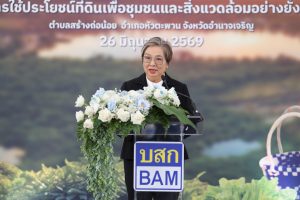
Bangkok Commercial Asset Management Public Company Limited (BAM) has signed a memorandum of understanding with the Mae Fah Luang Foundation under Royal Patronage (MFLF) to develop a 33-rai non-performing asset in Amnat Charoen into a model green space.

The “Model Green Space Development Project for Sustainable Land Use Benefiting Communities and the Environment” aims to transform the BAM-owned site into an area that delivers tangible benefits for local communities, society and the environment.

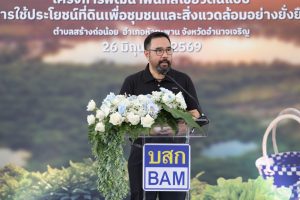
Mrs. Tongurai Limpiti, Chairman of BAM, said the collaboration represented an important step in bringing together the business sector, civil society and local communities to create balanced economic, social and environmental value.

BAM places importance on managing its assets while creating value for society in line with environmental, social and governance principles and its CSR-in-Process approach, she said.

The approach covers natural-resource restoration, the expansion of green space and improvements in people’s quality of life.

The project also aligns with BAM’s “Five Good Principles”: good for the country, society, customers, shareholders and employees.

Mrs. Tongurai said the initiative had the potential to become a model for creative land use that generated long-term shared value for all sectors. It could also serve as a learning site for ecosystem restoration and be replicated in other areas across Thailand.

The project reflects BAM’s ambition to transform “vacant land” into “land of opportunity” that delivers community benefits, creates jobs and income, and encourages sustainable local participation.


Turning non-performing assets into green assets

Dr. Rak Vorrakitpokatorn, Chief Executive Officer of BAM, said the company was working towards becoming a full-fledged sustainable “Value Creator”.

Asset management today must generate business returns while delivering positive social impact, he said. The green-space initiative demonstrates how a non-performing asset, or NPA, can be developed to create value across several dimensions.

The 33-rai site in Sang Tho Noi subdistrict, Huai Taphan district, Amnat Charoen, will be divided into two sections.

The first section, covering 31 rai, will be restored using a natural forest regeneration approach. A total of 3,600 trees representing 20 native species will be planted to rehabilitate the ecosystem, expand green space and enhance biodiversity.

The area will also be developed as a greenhouse-gas reduction project under the Thailand Voluntary Emission Reduction Program, or T-VER. It is expected to sequester approximately 29.45 tonnes of carbon dioxide equivalent annually.

The remaining two rai will be allocated for community use and economic and social activities. The project will seek to create jobs, generate income and develop occupational skills for more than 6,390 people across 13 villages.

Potential activities include an agricultural market, space for promoting local products, a community tree nursery, planting work and the long-term maintenance of the project area.

The development model will be based on meaningful community participation and the needs of local residents.

“This type of investment should not be regarded as a cost. It is an investment in improving asset quality and strengthening the organisation’s long-term sustainability,” Dr. Rak said.

“It will also lay the foundations for increasing the value of the property in the future. BAM aims to build on this initiative by developing a broader Green Asset Portfolio.

“Another important aspect of the project is its role as an ecological corridor between Dong Yai forest and the Chaloem Phrakiat Open Zoo. This will improve the continuity of green areas, strengthen the surrounding ecosystem and increase long-term carbon-sequestration potential.”

“Planting forests” alongside “planting people”

M.L. Dispanadda Diskul, Secretary-General and Chief Executive Officer of the Mae Fah Luang Foundation under Royal Patronage, said the foundation had worked for more than four decades to restore forests while strengthening local communities.

Over the past four to five years, MFLF has expanded its work by applying knowledge from the restoration and management of Doi Tung’s forests to community forests in 12 provinces across Thailand.

Sang Tho Noi is among the communities that have consistently demonstrated strong community forest management, he said.

The area has significant natural capital, local wisdom and an established livelihood base that can be further developed.

“The important point is that this project is not only about planting forests. It is also about planting people,” M.L. Dispanadda said.

“This means encouraging community participation, creating jobs and livelihoods, and developing the capabilities of local people alongside the proper and sustainable management of the environment. This is the mission that the Mae Fah Luang Foundation has pursued throughout its work.”

Under the development plan, the project will establish green space by planting native economic tree species in patterns that mimic natural forest growth.

The initiative will restore the ecosystem and support carbon sequestration while improving the quality of life of local communities through livelihood development.

The area is also expected to become a learning and study-visit destination in the future.

MFLF believes its collaboration with BAM will mark an important starting point for balanced development across economic, social and environmental dimensions. The initiative also has the potential to become a sustainable development model that can be adapted and replicated in other areas.