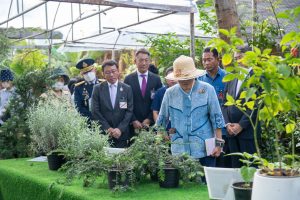
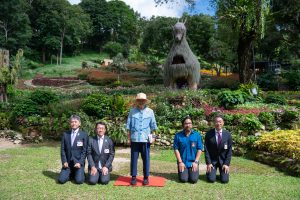
The Royal Thai Embassy in Doha, led by H.E. Mr. Sira Swangsilpa, Ambassador of the Kingdom of Thailand to the State of Qatar (5th from right), in collaboration with the Mae Fah Luang Foundation under Royal Patronage, represented by Visit-orn Rajatanarvin Director of Knowledge and Learning Centre (KLC) (2nd from right), participated in the Earthna Summit 2025. At the summit, they shared the concept of “People-Centered Development”, inspired by the Doi Tung Development Project — a practical and sustainable development model. The delegation also showcased Doi Tung products that exemplify an integrated approach connecting people, forest, and market in a systematic and sustainable way. The event took place recently in Doha, Qatar.
corpcom
The Mae Fah Luang Foundation under Royal Patronage donates 1.5 million baht to the United Nations World Food Programme to contribute to the earthquake response in Myanmar.
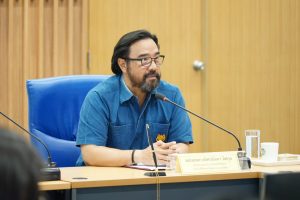
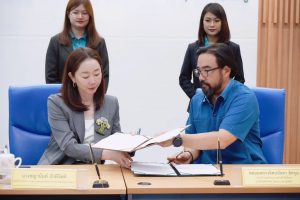
M.L. Dispanadda Diskul (right), Secretary-General and Chief Executive Officer of the Mae Fah Luang Foundation under Royal Patronage, represented the Foundation in handing over a donation of THB 1,500,000 (one million five hundred thousand baht) to Mr. Samir Wanmali (left), Regional Director of the United Nations World Food Programme (WFP) for Asia and the Pacific. The donation, mobilized through the Foundation’s extensive network of partners and individuals, will contribute to WFP’s earthquake response in Myanmar—providing life-saving assistance to affected populations and supporting the second phase of operations, which focuses on targeted support, livelihood recovery, and strengthening the resilience of the hardest-hit communities. The handover ceremony was held recently at the WFP Asia and the Pacific Regional Office in Bangkok.
The Coffee House by DoiTung: The Pinnacle of Thai Specialty Coffee From the Highland Plantations of DoiTung to the Nation’s Landmark Project, One Bangkok
Rooted in a sustainable development initiative that uplifts highland communities, DoiTung coffee has transcended boundaries from plantation to cup, reaching the heart of Bangkok as an integral part of One Bangkok, a national landmark project. Through The Coffee House by DoiTung, a specialty café crafted by Thai artisans, the brand solidifies its success in elevating Thai coffee onto the global stage.
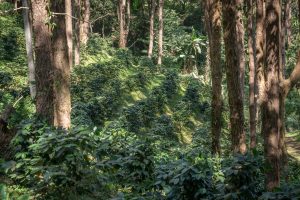
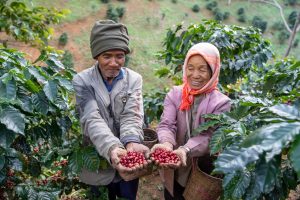
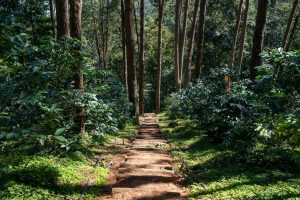
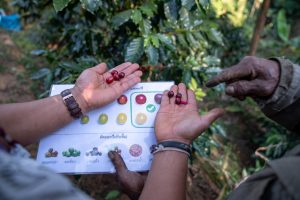
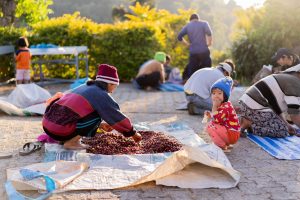
Doi Tung’s journey began in a region once plagued by opium cultivation. Through the initiative of the Doi Tung Development Project under the Royal Patronage of the Mae Fah Luang Foundation Under Royal Patronage, the land was rehabilitated and transformed into a thriving hub for premium Arabica coffee cultivation in Chiang Rai Province. Grounded in the philosophy of “People living in harmony with the forest,” this sustainable development effort provided communities with stable employment and economic opportunities, replacing illicit activities driven by lack of knowledge and access to alternatives. The project has successfully restored the environment, cultivating 100% Arabica coffee under a canopy of towering trees, ensuring ecological balance while maintaining high-quality production. The initiative focuses on meticulous agricultural practices, purchasing only premium-grade coffee to ensure fair, sustainable income for farmers. Ultimately, the project aims to empower farmers to achieve financial independence without relying on ongoing external support—a true testament to the foundation’s success.
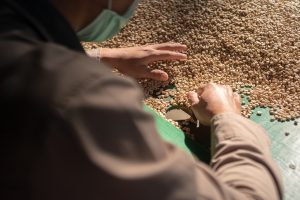
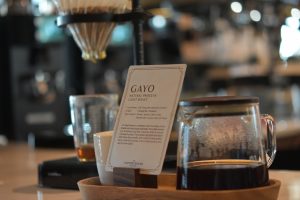
The hallmark of DoiTung coffee lies in its stringent quality control across the entire production process. Every coffee bean is traceable back to its origin, recording the household, date of sale, and product quality, guaranteeing that every cup served is of Grade A standard. Through dedicated research and development in coffee varietals, processing techniques, and production standards, DoiTung proudly cultivates specialty-grade varieties such as Gayo, alongside Caturra and Bourbon, all of which undergo rigorous selection and processing. This dedication to excellence has earned DoiTung recognition from professional coffee tasters and prestigious awards, including the Cup of Excellence—a global platform celebrating outstanding coffee farmers. Even DoiTung’s mass-market coffee maintains specialty-grade quality, underscoring the brand’s unwavering commitment to excellence.
Beyond cultivating world-class coffee, DoiTung collaborates with domestic and international partners to drive sustainable coffee business development while enhancing farmers’ livelihoods. Key partnerships include Mi Cafeto, KALDI, MUJI, the University of Tokyo, Thai Airways, and Japan Airlines. These collaborations provide farmers access to new markets, cutting-edge agricultural and processing technologies, and support for environmentally sustainable practices, addressing the growing consumer demand for eco-conscious products.
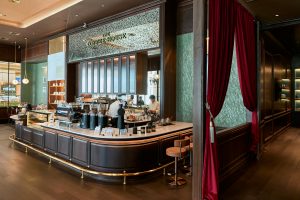
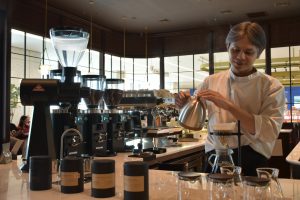
One of DoiTung’s latest milestones is its proud integration into One Bangkok, a landmark Thai development project, through the launch of The Coffee House by DoiTung. This premium café offers an immersive experience, sharing the journey of Thai specialty coffee from highland plantations to an exquisite cup. The selection includes an array of specialty coffee varieties cultivated through meticulous agricultural management, expertly roasted and brewed by skilled baristas. DoiTung’s specialty coffee, including award-winning varietals such as Typica (Dry/Natural Process) recognized by ICP and SEAGCC, and Gesha (Washed Process) with its distinctive taste notes, is crafted to perfection. The café also presents signature drinks like Espresso Honey Tonic, Tiramisu Latte, and Biscoff Latte, alongside a variety of standard coffee options with customizable house and seasonal blends. For non-coffee drinkers, the menu extends beyond coffee to include beverages like Pink Coconut Matcha and Chocolate, along with an exquisite selection of pastries and gourmet food, creating the perfect pairing for a refined café experience. The ambiance of The Coffee House by DoiTung exudes European café aesthetics, offering a serene environment ideal for relaxation or work. Guests can enjoy a dedicated Private Zone for informal meetings or social gatherings and a Slow Bar for interactive sessions with baristas, delving into the intricate journey of DoiTung coffee.
Experience the pinnacle of sustainable coffee excellence while supporting highland communities at The Coffee House by DoiTung, now open on the 3rd floor of the Parade Building, One Bangkok. Operating daily from 10:00 AM to 9:00 PM, the café invites guests to savor an elevated coffee experience. Stay updated via Instagram: thecoffeehouse.doitung.
Mae Fah Luang Foundation, under the Doi Tung brand, shares its Zero Waste to Landfill knowledge with the entertainment industry for the first time.
The Mae Fah Luang Foundation, under the DoiTung brand, is bringing its Zero Waste to Landfill knowledge to the entertainment industry for the first time. Amidst the rapid and ongoing rise of Thai series on the international stage, this collaboration signals a powerful new direction—one where storytelling, identity, and sustainability intersect. In partnership with MOJO MUSE MANAGEMENT (MMM), a forward-thinking production company known for weaving cultural and social themes into its narratives, the Foundation is adapting its proven “Doi Tung Model”—which has supported livelihoods while eliminating landfill waste for over a decade across 24 surrounding villages—into a new scale and context. For the first time, this model will be tested in professional media production, offering clear systems for waste separation, resource circulation, and sustainable operations. If successful, it won’t just be a “mindful backstage effort” but a replicable blueprint for the entire industry. As series continue to shape the minds of younger generations—the future leaders of our society—this collaboration shows that environmental responsibility and the principles of the Mae Fah Luang legacy can be shared, scaled, and rooted in every industry. Because saving our planet should never fall on one group alone—it must become a shared mission across all sectors striving for a more livable world.
Empowering Women through Sustainable Development – The Case of Doi Tung
Annual Report 2021
Mae Fah Luang Foundation and SEC Innovate Carbon Credit Offsetting Project to Combat Climate Change
Mae Fah Luang Foundation and the Securities and Exchange Commission have jointly initiated the “You Care For Forests, We Care For You” project together with civil society in four provinces to produce carbon credits for sale to the business sector. The project is also expanding to cover 300,000 rai around the country to increase income for local communities and offset climate change.
M.L. Dispanadda Diskul, CEO of Mae Fah Luang Foundation under Royal Patronage, revealed that the “You Care For Forests, We Care For You” project is a pilot project that implements carbon offsetting mechanisms in the forest as part of sustainable development efforts. It was initiated by the Securities and Exchange Commission (SEC) and the Mae Fah Luang Foundation in an effort to merge community development and forest conservation to reduce greenhouse gases emissions in Thailand.
This project has been in operation for 15 months in conjunction with 16 forest communities in Chiang Rai, Chiang Mai, Mae Hong Son and Phayao provinces, covering an area of 19,611 rai. A total of 9,166 villagers have benefited from the project which has received support from various sectors, since it helps to reduce environmental impact, with clear advantages to the communities, the private sector and the country as a whole. It targets communities covered by the Community Forest Act B.E. 2562 so they have an alternative livelihood and a stable lifestyle while protecting the forests. It is expected that a total of 392,220 tons of carbon dioxide equivalent will be produced from 16 community forests in the 20-year period.
“Thailand’s greenhouse gas emission is ranked at 12th in the world, or over 300 million tons per year, which puts the country at greater risk of severe impacts of climate change,” said M.L. Dispanadda. “Furthermore, greenhouse gas is becoming a factor in world trade, so if we do not address the issue quickly, we will definitely suffer the consequences.”
Each community forest that signs up for the program has to pass all standard requirements in order to register for the Thailand Voluntary Emission Reduction Program (T-VER) under the Thailand Greenhouse Gas Management Organization, with independent monitoring units.
“These communities are provided with information on how to protect forests to evaluate the amount of carbon credits that can be exchanged in the future. There is also a fund to support new livelihoods that are initiated by the communities themselves, so that forest conservation contributes to improved well-being. The participating private sector organizations will then contribute to developing human potential, supporting community forest conservation efforts, and receive carbon credits to offset their greenhouse gas emissions.”
The community forest pilot project in four provinces has received the support of seven organizations, namely the Securities and Exchange Commission, Thai Beverage PCL, Intouch Holding Co., Ltd., TMT Steel PCL, Siam Commercial Bank PCL, PricewaterhouseCoopers Co., Ltd., and PTG Energy PCL, who jointly contributed 43 million baht to lay the foundation for the communities over the 6-year period.
Part of the budget will go towards the geographic information system (GIS) and field work, setting up model T-VER plots to evaluate carbon credits, and organizing community training workshops. Another part will go towards a forest conservation fund and a quality of life development fund. Currently, the communities have already formed five new livelihood groups, such as making utensils from leaves, bamboo basketry, organic fertilizers, and a central market for community products.
Since the global community has started using environmental standards as a criteria in conducting world trade, it is estimated that the price of carbon credits will increase over the next 10 years. Mae Fah Luang Foundation has therefore taken its pilot project a step further, putting it into action together with another 33 communities covering an area of 32,500 rai in Chiang Mai, Kamphaeng Phet, Uthai Thani and Krabi provinces from 2021-2022, with plans to expand to 150,000 rai of community forests by 2023. It is estimated that those combined community forests will be able to capture about 2.8 million tons of carbon dioxide equivalent of greenhouse gases, creating an income of 840 million baht for the communities over 20 years.
There are also ongoing efforts to expand forest carbon programs throughout the country in conjunction with various units under the Ministry of Natural Resources and Environment, such as the Department of Forestry, the Department of National Parks, the Department of Marine and Coastal Resources and the Thailand Greenhouse Gas Management Organization.
“The Ministry of Natural Resources and Environment is very invested in this program, and have same viewpoint on the matter. Therefore, we are working not only with the communities but also with the Ministry to improve our field access under the auspices of the Ministry in order to ensure than the carbon credit system is sound and valid.”
M.L. Dispanadda went on to explain that the decisive factor that will lead towards success is the cooperation of all sectors as well as the communities that protect the forests.
“Mike Berners-Lee, an expert in greenhouse gas foot-printing, said that one hour of mobile phone usage per person per day contributes 63 kgs of carbon a year. If you calculate all the mobile phones in the world, and the amount of time used each day, that’s a massive amount of carbon emission. We all play a part in impacting the environment, and we can all participate in solving the problem too.”
Organizations and individuals who wish to support the “You Care For Forests, We Care For You” project are invited to donate 2,500 baht per rai (for the duration of the 6-year program). For further details, contact email: decarbonization@doitung.org
Her Royal Highness Princess Maha Chakri Sirindhorn Visits Doi Tung Development Project
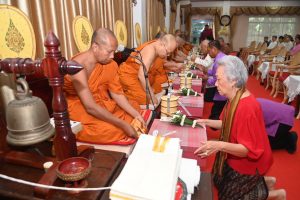
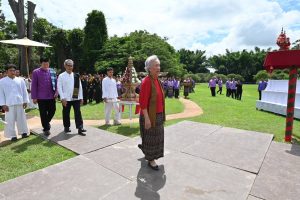
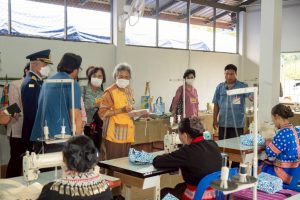
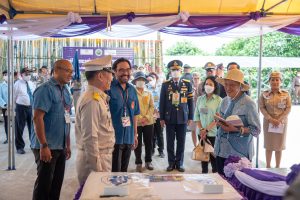
On 17 February 2022, at 8:30am, Her Royal Highness Princess Maha Chakri Sirindhorn visited the Tea Oil Crops Research and Development Project in Thoet Thai Sub-district, Mae Fah Luang District, Chiang Rai Province. On hand to welcome the Princess were Mr. Phassakorn Boonyalak, Governor of Chiang Rai Province; Mr. Veerathai Santiprabhob, Secretary-General of Mae Fah Luang Foundation under Royal Patronage; and M.L. Dispanadda Diskul, CEO of Mae Fah Luang Foundation.
Mr. Boonchob Suthamanuswong, Manager of the Tea Oil Project, delivered a report on the project’s operations for 2021. The project yielded 123 tons of tea oil earning a total income of over three million baht for the villagers. This was the result of improving the variety and increasing the output of 41,703 trees, as well as grafting tea oil trees for farmers in 671 plots. Then Mr. Wongsakorn Chemeu, one of the project’s model farmers, delivered his report on how he improved his tea oil crop culture methods and knowledge-sharing with other farmers.
Mae Fah Luang Foundation has been operating the tea oil project in conjunction with the Chaipattana Foundation since 2006 in response to the royal initiative of Her Royal Highness Princess Maha Chakri Sirindhorn who saw the commercial potential of tea oil crops that could provide a stable and long-term income for villagers. The project acquired tea oil tree seeds and saplings from China which were planted on an experimental basis in two areas with degraded forests in Chiang Rai—Pang Mahan and Puna villages in Thoet Thai Sub-district, Mae Fah Luang District—totaling 3,417 rai. Today, the project has a total of 480,263 tea oil trees.
Mae Fah Luang Foundation also promotes other livelihoods for the local communities including raising Meishan pigs, black bone chickens, and planting alternative crops such as Assam tea, chilis, and lemongrass in their cultivation areas.
At 9:25am, the Princess arrived at Phya Phrai Traimitr School, where Ms. Narumol Suthum, Mae Fah Luang Foundation’s Community Relations officer, delivered a report on the operations of the promotion and development of community handicrafts activities for the year 2021. A total of 27 local villagers attended the skills training workshop, and over 14,000 handicraft items were produced, earning a total of 140,000 baht. The Princess then viewed samples of handicrafts by the villagers of Ban Huai Uen and Ban Mae Kham Noi villages who were on hand to greet the Princess.
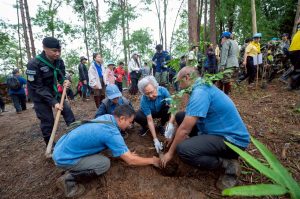
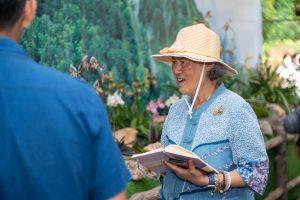
At 10:10am, the Princess arrived at the Tea Oil Crop Research and Development Project office in Pang Mahan, where she watered and fertilized the tea oil tree that she grafted on 15 February 2018. The Princess then planted a red tea-oil camellia and a tea oil tree from Guangxi autonomous region in China.
Mr. Boonchob Suthamanuswong, Manager of the Tea Oil Project, and Mr. Thiraphan Tothirakul, Manager of the Plant Research and Development Division, Mae Fah Luang Foundation, delivered a report on the progress of the red tea oil camellias crops, and the research conducted on each variety. Mr. Ja-Er Sae Hu, one of the model farmers in the Tea Oil Project, also delivered a report on his improved tea oil crop cultivation methods.
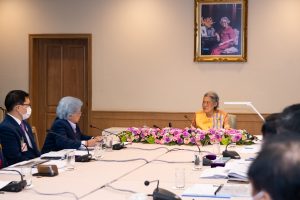
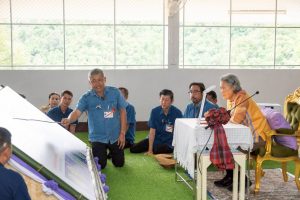
At 1:45pm, the Princess arrived at Ban Pa Sang Na Ngern School, Ban Pa Sang Na Ngern Village, Mae Fah Luang Sub-district, Mae Fah Luang District, where she was welcomed by Thanphuying Putrie Viravaidya, Chairman of the Board of Directors, Mae Fah Luang Foundation; Mr. Veerathai Santiprabhob, Secretary-General; and Khunying Puangroi Diskul na Ayudhaya, member of the board. The Princess chaired a meeting for the School Development Project in the vicinity of Doi Tung Development Project and outreach areas in Mae Fah Luang District for the academic year 2021. Operation results for 2021 covered the following topics:
- Progress of the Montessori teaching approach in early childhood education level.
- Progress of Thai language classes for children whose first language is not Thai in 36 schools in the Doi Tung Development Project area and outreach areas in Mae Fah Luang District, as well as the implementation of a curriculum that caters to the diverse needs of the local children in conjunction with St Andrew’s International School
- Progress of Thai language reading classes in conjunction with the Sirindhorn Thai Language Institute, Chulalongkorn University, for Prathom 4-6 levels
- Progress of the basic vocational skills training for Mathayom level pupils.
Furthermore, the Princess was briefed on the results of research and assessment of children with learning disabilities in Mae Fah Luang District, as well as the integration of 5G technology at knowledge centers in conjunction with True Corporation Public Company Limited.
The Princess then observed the work of pupils under the Project-Based Learning approach, the Zero Waste project at Ban Kha Yang Pattana School which received third prize in the 2021 National Zero Waste Community Project, the exhibition by the basic agriculture, food and handicraft vocational training workshops, Thai language teaching demonstrations for Prathom 1-3 pupils who have difficulty learning the Thai language, and demonstrations on the Thai language syllabus for Prathom 4-6.
Her Royal Highness Princess Bajrakitiyabha Narendira Debyavati Visits Roi Jai Rak Project in Mae Ai District, Chiang Mai Province
On 5 January 2022, Her Royal Highness Princess Bajrakitiyabha Narendira Debyavati visited the Roi Jai Rak Project in Tha Ton Sub-district, Mai Ai District, Chiang Mai Province, where she met with villagers within the project area.
Roi Jai Rak Project is an integrated project conducted jointly by local government offices, the Office of the Narcotics Control Board (ONCB) and Mae Fah Luang Foundation under Royal Patronage, to implement sustainable alternative livelihood development to combat narcotic issues in the area. The project served to offer opportunities and alternative legitimate livelihoods to the villagers based on their geo-social environment, building on existing folk wisdom, creating value-added, as well as targeting education and youth development, and the restoration of natural resources. This would allow the community to access basic public amenities such as public health services, water for use and consumption, a quality education, a legitimate livelihood that could support their families, protect the forests and also provide a sustainable and quality lifestyle.