MFLF showcases Amnat Charoen community forest model Carbon credits finance forest protection in the Northeast while community funds support local livelihoods

The Mae Fah Luang Foundation under Royal Patronage (MFLF) has highlighted lessons from the successful community forest model in Sang Tho Noi subdistrict, Huai Taphan district, Amnat Charoen province, following the community’s participation in the Carbon Credit from Community Forests for Sustainability project since 2023.

The initiative has demonstrated that carbon credits can be more than an environmental mechanism. They can provide communities with a structured system for protecting forests, funding for livelihood development and opportunities to generate sustainable income from their natural resources.

The area is now preparing for external verification and the submission of its carbon credits for certification by the Thailand Greenhouse Gas Management Organization (Public Organization), or TGO.

A total of 12,645.31 rai has been registered under the Thailand Voluntary Emission Reduction Program, or T-VER, with the area expected to generate 11,275 tonnes of carbon dioxide equivalent in credits annually.

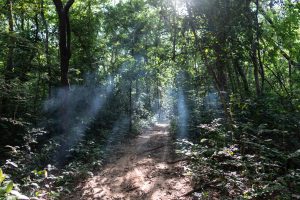
The community forest is also being developed into an ecotourism route where visitors interested in sustainability can learn how forest conservation can support livelihoods, income generation and improvements in community well-being over the long term.

Carbon credits support forests and livelihoods

Launched in 2020, the Carbon Credit from Community Forests for Sustainability project brings MFLF together with government agencies, private-sector organisations and local communities. It uses carbon credits as a mechanism that enables communities to protect their forests while strengthening their capacity for self-reliance.

Two key funds have been established: the Forest Protection Fund and the Sustainable Community Development Fund.

The Forest Protection Fund finances firebreak construction, patrols, wildfire surveillance and forest restoration. The Sustainable Community Development Fund supports livelihood development and economic activities that build on each community’s natural-resource base.

The project has now entered its fifth phase. Amnat Charoen forms part of Phase 3, which began in 2023 and covers community forests in Chiang Rai, Chiang Mai, Yasothon and Amnat Charoen.

Private-sector partners from a wide range of industries have supported the initiative, including businesses in beverages, energy, petrochemicals, finance and banking, aviation, property, consumer goods and agri-food.

Their participation shows that the sustainability model developed through the Doi Tung Development Project can be scaled and adapted to different areas.

It also demonstrates that community forest protection is not solely a local environmental responsibility, but an important mechanism connecting Thailand’s climate targets, corporate sustainability goals and the quality of life of local communities.

Mr. Smitthi Harueanphuech, Chief Nature Based Solutions Officer at MFLF, said the foundation had adapted its experience from the Doi Tung Development Project to expand the Carbon Credit from Community Forests for Sustainability project across several regions of Thailand.

The Northeast is one of the project’s key regions because of the strength of its communities, the value of its community forest resources and the readiness of local leaders, he said. The project currently operates in Amnat Charoen and Yasothon in the northeastern region.

“What the Mae Fah Luang Foundation considers most important is ensuring that forest protection is genuinely connected to the lives of local communities,” Mr. Smitthi said.

“A community forest is not simply a conservation area. It is a resource base, a foundation for livelihoods and an economic asset for local people.

“When a community has a strong management system, carbon credits can provide a mechanism for continuous forest protection while delivering long-term benefits to the community.”

More than 7,500 people connected to the forest

Ms. Pathomporn Songlilitchuwong, Senior Project Manager at MFLF, said Sang Tho Noi subdistrict had 16,385 rai of community forest designated under the Community Forest Act.

Of this, 12,645.31 rai has been registered under T-VER, covering 13 villages, 1,761 households and 7,596 residents.

The project is conducting surveys and updating site information to confirm project boundaries, assess changes in land use, estimate carbon sequestration and prepare greenhouse-gas monitoring reports.

The next steps will involve verification by an independent validation and verification body, followed by an application to TGO for carbon-credit certification.

The 13 villages receive financial support through the project’s two funds.

The Forest Protection Fund finances wildfire prevention, firebreak construction, patrols, wildfire surveillance, enrichment planting and the procurement of firefighting equipment.

The Sustainable Community Development Fund provides financing for local development and income-generating activities while communities wait for carbon credits to be issued. These activities include local food processing, handicraft production and the manufacture of organic soil conditioners.

Developing a community ecotourism route

Sang Tho Noi is also working with partner organisations to develop an ecotourism route under the Tourism Authority of Thailand’s Village to the World Season 5 project.

PTT Global Chemical Public Company Limited, or GC, is among the partners supporting the community’s development as a sustainability learning destination.

The initiative seeks to connect the area’s natural capital, local way of life and community capabilities through a tourism route that generates income while promoting the long-term stewardship of natural resources.

“What makes this area distinctive is that Dong Yai forest is not merely a conservation forest. It is the community’s natural capital and a foundation for local life,” Ms. Pathomporn said.

“It provides seasonal food and income from natural resources, supports local livelihoods and is now being developed into a sustainable tourism route.

“The area demonstrates how forests and communities can be managed together, and how local resources can be transformed into economic opportunities.”

Dong Yai forest is also regarded as the community’s “natural supermarket”, serving as a source of food and income and playing an integral role in the lives of local residents.

Its resources include seasonal mushrooms, red ant eggs, edible insects such as June beetles and stink bugs, fish and other products from local waterways.

The area also has a rich base of local knowledge, arts and crafts, including silk weaving, basketry, the processing of natural products and the production of pelletised organic soil conditioners.

These activities demonstrate the responsible use of natural resources and show how the community development fund can generate income that continues to circulate within the local economy.

Community develops shared forest-management system

Mr. Tanu Somnam, Chair of the Ban Kham Kha Community Forest Committee and headman of Sang Tho Noi subdistrict, said participation in the project had helped residents recognise the value of forest protection more clearly.

Local people had long worked together to protect Dong Yai forest as a source of food and water and as a vital part of life across the subdistrict.

The project has helped the community establish clearer plans, responsibilities and common goals for wildfire surveillance, firebreak maintenance and forest patrols. It has also encouraged residents to consider how community resources can be used beneficially without damaging the forest.

“What makes the community proud is that Dong Yai is no longer simply a forest protected by local residents. It is becoming a learning destination that can generate income for the community,” Mr. Tanu said.

“Carbon credits are therefore not something distant from our lives. They are directly connected to our food, livelihoods, income and the future of our children.”

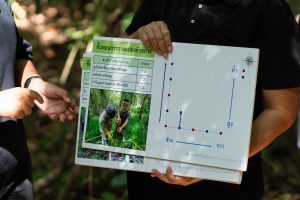
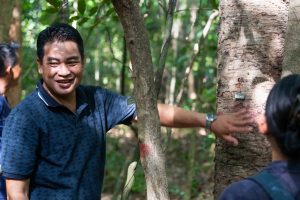
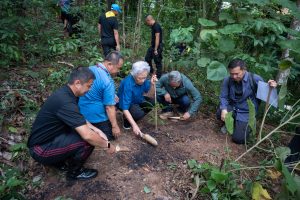
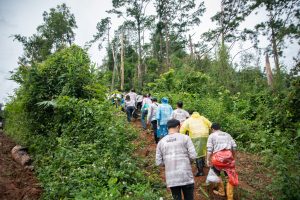
The tourism route currently under development will introduce visitors to community forestry and the measurement of trees for carbon-credit assessments.

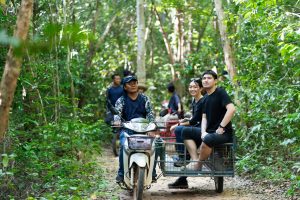
Activities will include rides on local motorised sidecar vehicles along forest routes developed from patrol trails and firebreaks, eco-printing using natural dyes, and visits to local silk and handicraft producers.

Visitors will also be able to visit the sacred Sang Tho well and take boat trips along the Lam Se Bai waterway to experience the natural landscape and the richness of northeastern forests along both riverbanks.

Project covers 303 communities nationwide

The Carbon Credit from Community Forests for Sustainability project now covers 303 community forests across 12 provinces: Chiang Rai, Chiang Mai, Phayao, Mae Hong Son, Tak, Kamphaeng Phet, Uthai Thani, Krabi, Yasothon, Amnat Charoen, Nan and Lampang.

The project encompasses 287,944 rai of forest and benefits 161,171 people from 52,359 households, with support from 30 partner organisations.

Project results demonstrate the effectiveness of involving communities directly in forest protection and wildfire prevention.

Monitoring of wildfire-damaged areas before and after communities joined the project found that the average affected area in Phases 1 and 2 fell from 11.41% to 1.99% in 2024.

In Phase 3, the proportion declined from an average of 8.17% to 1.18% in 2025, while Phase 4 recorded a decrease from 21.75% to 0.77%.

The figures indicate that the Forest Protection Fund and community-led management can deliver tangible reductions in wildfires, one of the major sources of PM2.5 air pollution from forest burning.

When communities have access to resources, effective management systems and fair incentives, community forests can simultaneously serve as a climate solution, a foundation for local economies and    a source of long-term security and well-being for local people.

Preserving Karen arts and culture

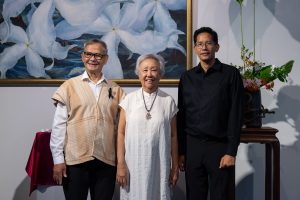
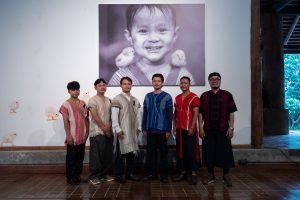
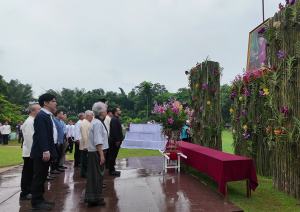
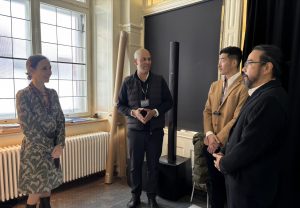
Mr. Nakorn Phongnoi (centre), Director of Mae Fah Luang Art and Cultural Park, organised the “Karen Ethnic Art” exhibition, showcasing outstanding works by Karen artists from across Thailand.

Capt. Jitas Sornsongkram (second from left), a member of the Board of Directors of the Mae Fah Luang Foundation under Royal Patronage, presided over the opening ceremony.

Also attending were Khunying Puangroi Diskul na Ayudhaya (third from right), a member of the Foundation’s Board of Directors; M.L. Dispanadda Diskul (second from right), Secretary-General and Chief Executive Officer of the Foundation; and Ms. Phawana Niemloy (third from left), a member of the Foundation’s Board of Directors.

The event was held at Mae Fah Luang Art and Cultural Park in Chiang Rai on July 17, 2026.

Note: The “Karen Ethnic Art” exhibition has been open to visitors since July 19, 2026. It is open from Tuesday to Sunday, from 8am to 4.30pm, at Mae Fah Luang Art and Cultural Park in Chiang Rai.

Preserving Karen arts and culture

Mr. Nakorn Phongnoi (centre), Director of Mae Fah Luang Art and Cultural Park, organised the “Karen Ethnic Art” exhibition, showcasing outstanding works by Karen artists from across Thailand.

Capt. Jitas Sornsongkram (second from left), a member of the Board of Directors of the Mae Fah Luang Foundation under Royal Patronage, presided over the opening ceremony.

Also attending were Khunying Puangroi Diskul na Ayudhaya (third from right), a member of the Foundation’s Board of Directors; M.L. Dispanadda Diskul (second from right), Secretary-General and Chief Executive Officer of the Foundation; and Ms. Phawana Niemloy (third from left), a member of the Foundation’s Board of Directors.

The event was held at Mae Fah Luang Art and Cultural Park in Chiang Rai on July 17, 2026.

Note: The “Karen Ethnic Art” exhibition has been open to visitors since July 19, 2026. It is open from Tuesday to Sunday, from 8am to 4.30pm, at Mae Fah Luang Art and Cultural Park in Chiang Rai.

31 Years Since the Passing of the Princess Mother MFLF holds commemorative activities in honour of her boundless benevolence

The Mae Fah Luang Foundation under Royal Patronage (MFLF) recently organised a series of activities in Chiang Rai to mark the 31st anniversary of the passing of Her Royal Highness Princess Srinagarindra, the Princess Mother, commemorated annually on July 18.

The activities included enrichment planting to restore the Doi Tung ecosystem, the annual “Karen Ethnic Art” exhibition, a merit-making ceremony and a traditional floral-offering ceremony.

The programme was held in remembrance of the Princess Mother’s boundless benevolence and to carry forward her royal vision of “Planting Forests, Planting People” through tangible action in forest restoration, ecosystem stewardship and the improvement of community well-being.

These principles continue to guide the foundation’s work towards the sustainable coexistence of people and nature.

The programme began with an activity under the project “Forest Rehabilitation and Enrichment: Reviving Original Forests in Continuation of the Royal Initiative”.

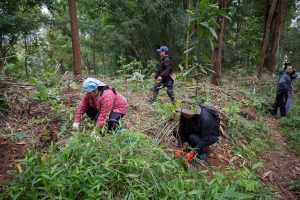
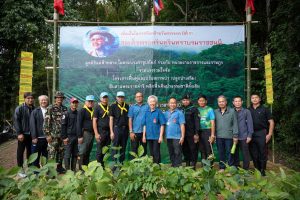
MFLF joined government agencies and local residents in planting 2,000 saplings representing more than 20 native tree species across 50 rai, or approximately eight hectares, near Ban Mae Poen in Mae Fah Luang subdistrict and Mae Fah Luang district, Chiang Rai.

The activity aimed to rehabilitate forest damaged by wildfires and the mass flowering and subsequent die-off of bamboo in 2024, while enhancing biodiversity and the area’s capacity to sequester carbon.

Khunying Puangroi Diskul na Ayudhaya, a member of the MFLF Board of Directors, said the Princess Mother’s declaration, “I will plant forests on Doi Tung,” reflected her remarkable foresight.

The Princess Mother recognised the importance of forest restoration more than 50 years ago, she said. Today, the world is facing increasingly severe climate variability, making nature restoration an urgent priority requiring action from all sectors.

Biodegradable seedling bags made from cassava starch were used during the planting activity. The bags decompose in soil within four weeks, helping to reduce plastic waste while protecting the seedlings’ roots from damage during planting.

Dry bamboo left by the die-off was also converted into biochar to improve soil quality and reduce the accumulation of combustible material in the forest.

The newly planted trees are expected to sequester approximately 35 tonnes of carbon dioxide equivalent annually.

Exhibition promotes Karen artistic heritage

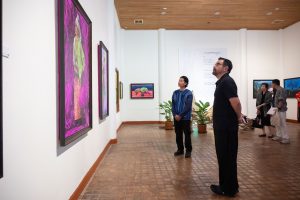
Mr. Nakorn Phongnoi, Director of Mae Fah Luang Art and Cultural Park, subsequently organised the annual “Karen Ethnic Art” exhibition, featuring outstanding works by Karen artists from across Thailand.

Capt. Jitas Sornsongkram, a member of the MFLF Board of Directors, presided over the opening ceremony. Khunying Puangroi Diskul na Ayudhaya, M.L. Dispanadda Diskul and Ms. Phawana Niemloy also attended the event.

The exhibition was organised to promote, preserve and pass on the artistic and cultural heritage of Karen ethnic communities.

It opened to the public on July 19, 2026, and can be visited from Tuesday to Sunday between 8am and 4.30pm at Ho Kaeo, Mae Fah Luang Art and Cultural Park in Chiang Rai.

Religious and traditional ceremonies

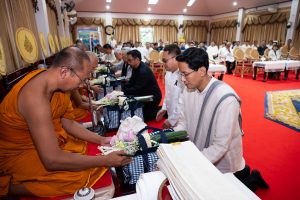
MFLF also held a merit-making ceremony at Wat Phra Kaew in Mueang Chiang Rai district, dedicating the merit to Her Royal Highness Princess Srinagarindra.

The commemorative programme concluded with a traditional khan dok floral-offering ceremony jointly organised by the Chiang Rai provincial administration and MFLF at Mae Fah Luang Art and Cultural Park, also known as Rai Mae Fah Luang, in Mueang Chiang Rai district.

The ceremony was held as an expression of gratitude for the Princess Mother’s immeasurable benevolence.

Chiang Rai Governor Chucheep Pongchai presided over the ceremony, which was attended by MFLF representatives, heads of government agencies, public- and private-sector organisations, and Chiang Rai residents.

MFLF turns four decades of Doi Tung experience into a “Living University” Field-tested knowledge transformed into sustainability programmes for today’s organisations

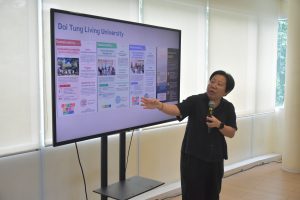
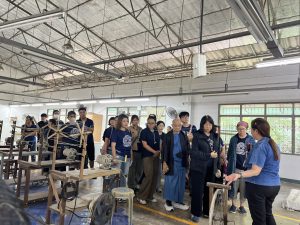
The Mae Fah Luang Foundation under Royal Patronage (MFLF) is building on nearly four decades of hands-on development experience at the Doi Tung Development Project (DTDP) in Chiang Rai to advance the “Doi Tung Living University”, a learning platform dedicated to sustainability.

The initiative distils lessons from the foundation’s work in environmental restoration, human and community development, livelihood creation, social enterprise and sustainable resource management into practical learning processes. Government agencies, private-sector companies, academic institutions and other interested organisations can adapt the knowledge to support their work in environmental, social and governance practices, sustainable leadership, nature-positive development, the circular economy and community development.

Visit-orn Rajatanarvin, Director of the Knowledge and Learning Centre at MFLF, said the experience of the Doi Tung Development Project had demonstrated that sustainable development could not be achieved by addressing individual problems in isolation. It required a comprehensive understanding of the connections between people, nature, the economy and society.

“Doi Tung is not simply a development project site. It is a vast living classroom where every tree and every square inch of land embodies knowledge gained through real-world experience — from achievements and lessons learned to challenges and approaches that can be adapted to other contexts,” she said.

“The Living University was established to gather, distil and share this body of knowledge so that it can benefit society, Thailand and the wider world.”

The Living University is not a conventional, degree-granting institution. Instead, it provides an opportunity to learn directly from the experience of the Doi Tung Development Project. Participants visit project sites, listen to community members and learn from development practitioners, field personnel and holders of local wisdom.

The process enables participants to understand the principles and practices of sustainable development from the perspectives of different groups before applying the knowledge to their own organisations, communities or areas of responsibility.

At the heart of the learning experience is an understanding of the processes behind Doi Tung’s transformation. The area once faced poverty, shifting cultivation and severe natural-resource degradation. It has since become a place where people and forests can thrive together.

This transformation was driven by the “Planting Forests, Planting People” approach, which connects environmental restoration with livelihood creation, income generation, community pride and participation throughout the development process.

For today’s organisations, the challenge is no longer simply to conduct occasional social or environmental activities. Sustainability principles must be incorporated into day-to-day operations, from strategy and stakeholder management to the development of successive generations of leaders, the design of social initiatives with tangible benefits and the measurement of outcomes for people, communities and nature.

“Many organisations now have clearer ESG and sustainability targets. The critical question is how to ensure that these commitments do not remain confined to reports, but lead to genuine change on the ground,” Ms Visit-orn said.

“The Living University therefore seeks to turn knowledge from Doi Tung into practical tools that participants can use to develop ideas, design initiatives and take further action. It has translated Doi Tung’s experience into sustainability programmes and learning processes tailored to the needs and circumstances of different audiences and organisations.”

Learning through experience

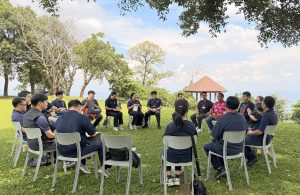
Waraporn Thanasuriyakiat, Manager of the Urban Youth Leadership Development Project at MFLF, said a defining feature of the Living University’s programmes was that participants did not simply listen to lectures.

Instead, they took part in experiential learning through field visits, discussions with practitioners, collective reflection and the application of lessons to challenges faced by their own organisations.

“We do not want participants to leave with ready-made answers. We want them to understand the thinking, the processes and the success factors that enable development to deliver tangible results,” she said.

“The programmes are therefore structured around five elements: Learn, Understand, Engage, Do and Apply. This enables participants to connect lessons from Doi Tung with their own circumstances.

“Doi Tung’s experience shows that sustainability is neither remote from our everyday lives nor the responsibility of any single department within an organisation. It is connected to how everyone thinks, works and makes decisions.

“Through the Living University, we invite organisations and other interested groups to ask themselves how we can live and work in ways that enable people to thrive, nature to survive and organisations to grow with purpose.”

Sustainability programmes for organisations

The Living University’s sustainability programmes allow participants to explore sustainable development principles through real-world case studies. They examine the connections between economic, social and environmental considerations, as well as methods for measuring development outcomes.

Programmes focusing on sustainability leadership and impact are designed for executives, sustainability teams, corporate social responsibility teams, human resources professionals and those responsible for organisational sustainability initiatives.

The programmes help participants understand the role of leadership, stakeholder engagement and the practical implementation of sustainability within an organisation. Participants can apply the knowledge directly to their work or pass it on to other employees.

In the environmental field, the Living University offers programmes based on lessons from waste management at the Doi Tung Development Project. These include Sustainable Waste Management, Zero Waste to Landfill and Community Engagement for Zero-Waste Initiatives.

The programmes help participants understand the root causes of waste, the management of materials throughout the waste system, from source to final destination, and the transition towards a circular economy. They also explore ways to engage communities and organisations in systematically reducing their environmental impact.

Business as a vehicle for positive impact

The Living University’s social enterprise programmes share lessons from the DoiTung social enterprise brand, which operates according to the principle of “Profit with Purpose”.

DoiTung uses market mechanisms alongside job creation and improvements in community well-being. Its experience demonstrates how business can serve as a vehicle for positive economic, social and environmental impact when its model is genuinely connected to the challenges and potential of a particular area.

The Living University also offers sustainability workshops that can be tailored to the needs and circumstances of individual organisations. Topics include ESG, the United Nations Sustainable Development Goals, biodiversity, sustainable leadership, key success factors and other specific sustainability issues.

The workshops employ experiential-learning tools, simulation games, hands-on activities and guided reflection to help participants connect sustainability knowledge more closely with their organisation’s work.

Programmes are also available for children and young people living in urban areas. These introduce young participants to nature as well as biological and social diversity, with the aim of nurturing future leaders who understand sustainability, appreciate the natural world and are prepared to grow while safeguarding nature for future generations.

Through the Living University, lessons from the Doi Tung Development Project are transformed into knowledge and practical tools that organisations can adapt to their own circumstances. The aim is to create lasting change for people, communities, nature and organisations.

Government agencies, businesses and other organisations interested in learning more or discussing the design of sustainability learning programmes tailored to their needs may contact the Sustainable Living Academy at the Mae Fah Luang Foundation under Royal Patronage on 053-767-015-7, extension 23700, or by email at klc@doitung.org.

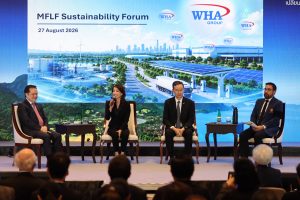
Mae Fah Luang Foundation Convenes MFLF Sustainability Forum 2026

Bringing Together Government, Business, Academia and Civil Society Leaders to Advance “Natural Capital” as a New Economic Foundation

Connecting Policy, Business, Finance and Communities to Turn Nature Positive from Concept into Action

When nature is no longer simply a matter of conservation, but also economic infrastructure, a source of business risk and a form of capital that will shape the country’s future, it must become part of how development decisions are made.

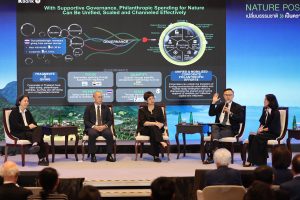
Against this backdrop, the Mae Fah Luang Foundation under Royal Patronage (MFLF) convened the MFLF Sustainability Forum 2026 for the fourth consecutive year as a central platform connecting knowledge, policy, finance and experience from real-world implementation. More than 500 participants from nearly 100 organizations across government, business, finance, academia, civil society and communities came together to advance a “Nature-based Economy” — an economy that grows on the foundation of nature — from the policy level and corporate financial statements and investment plans, all the way to creating income and greater security for communities that safeguard natural resources.

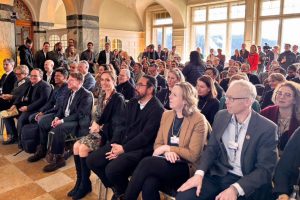
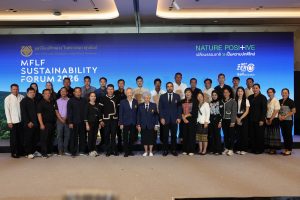
Held under the theme “Nature Positive: Making Nature the New Normal,” MFLF Sustainability Forum 2026 was officially opened by Thanphuying Putrie Viravaidya, Chairperson of the Mae Fah Luang Foundation under Royal Patronage. She was joined by members of the Foundation’s Board of Directors, M.L. Dispanadda Diskul, Secretary-General and Chief Executive Officer of the Mae Fah Luang Foundation under Royal Patronage, and representatives from across sectors at the Queen Sirikit National Convention Center in Bangkok on 27 August 2026.

Thanphuying Putrie said that the environmental crisis, degradation of natural resources and increasingly severe disasters are having direct impacts on the economy, society, health and people’s quality of life. Nature, therefore, cannot be separated from development; it is the foundation of life and the entire economic system.
“Making nature the new normal is not a burden on development. It is about designing a future in which nature functions as infrastructure that strengthens food security, reduces disaster risks and creates new and sustainable economic opportunities.”
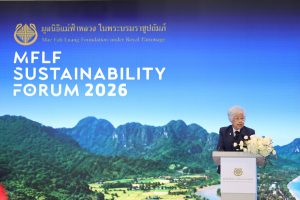
Dr. Raweewan Bhuridej, Permanent Secretary of the Ministry of Natural Resources and Environment, said in her keynote address that the world is confronting three interconnected environmental crises: climate change, pollution and biodiversity loss. Thailand must therefore move beyond merely reducing negative impacts towards a Nature Positive approach that halts nature loss and genuinely restores ecosystems.

The government is accelerating the development of the policy and legal architecture required to support this transition. This includes a draft Biodiversity Act, comprising eight chapters and 63 sections, as well as a proposed biodiversity development fund and mechanisms governing access to and utilization of biological resources, together with fair and equitable benefit-sharing.

At the same time, Nature Positive is being integrated into the draft 14th National Economic and Social Development Plan for 2028–2032 through a range of instruments, including Nature-based Solutions (NbS), the designation of Other Effective Area-based Conservation Measures (OECMs), Natural Capital Accounting (NCA), the creation of added value from biological resources through the Bioeconomy, as well as Green Loans and Biodiversity Credits designed to mobilize private capital for nature conservation and restoration.

Thailand has also set a target to increase terrestrial and marine protected areas, including OECMs, to at least 30% of the country’s area by 2030. At present, 22 OECM sites covering approximately 161.74 square kilometres have been recognized, while a further four potential OECM sites cover approximately 856.69 square kilometres.

The government has also linked financial mechanisms to national sustainability targets through Sustainability Bonds and Sustainability-Linked Bonds. Key indicators include reducing greenhouse gas emissions to 152 million tonnes of carbon dioxide equivalent by 2035, representing a 47% reduction from 2019 levels, as well as achieving the target of protecting 30% of the country’s area by 2030.

Dr. Raweewan emphasized that biodiversity should not be viewed solely as a cost. With clear legislation, robust data systems and transparent benefit-sharing mechanisms, biodiversity can drive research, innovation and commercial development, creating a new S-Curve for Thailand’s economy.

“Nature Positive is not the responsibility of the government alone. It requires collaboration among businesses, communities and organizations to turn biodiversity into both national resilience and new economic opportunities.”
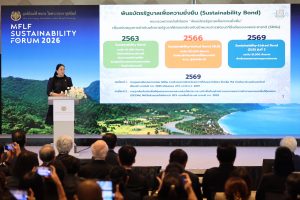
Nature Positive Business: Business Strategies in an Era Where Nature Is a Partner

The Nature Positive Business panel highlighted how nature is simultaneously a resource on which businesses depend, a risk that must be managed and an opportunity to create new value. Nature must therefore be incorporated into urban design, water management, supply chains and long-term investment, rather than treated as an activity separate from core business operations.

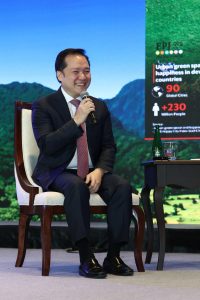
Mr. Panote Sirivadhanabhakdi, Group Chief Executive Officer of Frasers Property Limited, said cities account for as much as 60% of carbon emissions. Real estate development must therefore look beyond financial returns and bring nature and biodiversity back into urban environments, including green spaces, plant species, birds and ecosystems that have often been removed from conventional design in the interest of easier maintenance.

“We need to maximize the use of real estate, use less land more efficiently, and make nature better. That is at the heart of value creation.”
Ms. Jareeporn Jarukornsakul, Chairman of the Executive Committee and Group Chief Executive Officer of WHA Corporation PCL., said industrial estate development must consider people, forests and cities together. Large-scale developments inevitably affect waterways, ecosystems and surrounding communities. If an industrial estate blocks the natural flow of water, communities downstream will immediately feel the impact — and ultimately that impact will return as a business risk.

Development must therefore begin with an understanding of both nature and communities, while environmental action should be regarded as an investment that generates returns rather than an additional cost.

“ESG is not a cost. It is an investment, and investment must generate a return. Green has to be economically viable, because if green cannot sustain livelihoods, it cannot last. And if we start first, we can become leaders and help shape the rules.”
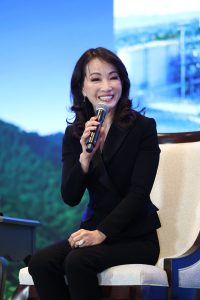
Mr. Saravoot Yoovidhya, Chief Executive Officer of TCP Group, said that although natural resources do not appear on corporate balance sheets, they are fundamental to the beverage business — from water and sugar to energy and materials used in packaging.

Resource management must therefore extend beyond the factory to communities, suppliers and the entire watershed. When communities are affected, businesses and consumer purchasing power are affected as well.

“We cannot look after only our own products, and this does not end at the factory gate. Businesses must help ensure that the surrounding ecosystems, suppliers and communities can continue to move forward as well.”
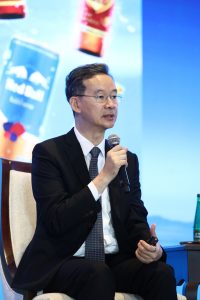
Nature Positive Society: From Mountains, Through Rivers, to the Sea — Understanding to Drive Change

The Nature Positive Society panel demonstrated that ecosystems have no boundaries. Changes in mountain ecosystems affect rivers and ultimately flow downstream to coastal areas and the sea, with consequences for food security and community incomes.

Environmental management must therefore take an ecosystem-wide approach, supported by data, science and mechanisms that enable communities to manage natural resources over the long term.

Assoc. Prof. Dr. Apinun Suvarnaraksha, Dean of the Faculty of Fisheries Technology and Aquatic Resources at Maejo University, said many rivers are facing contamination, sediment accumulation and the loss of aquatic habitats. When rocks and the substrates supporting plankton disappear from riverbeds, aquatic insects and small fish disappear with them, leaving some stretches of river as little more than “rivers of sand” with almost no life remaining.
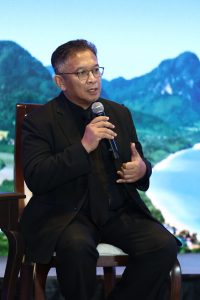
The Yom River alone is capable of producing more than four million kilograms of fish each year, illustrating the economic value and food security provided by healthy rivers. Yet approximately 85% of freshwater fish consumed today are non-native species, which could have long-term impacts on indigenous fish populations and biodiversity.

“If we listen to the fish, we can hear the river. When fish and other aquatic life disappear, it means the river is losing its ability to sustain people’s lives.”

Mr. Banjong Narupornmethee, Chairperson of the Ban Pru Chut Fish Cage Farming Community Enterprise in Trang Province, said planting mangroves or seagrass may only provide a short-term solution if there is no mechanism enabling communities to continue caring for them.

Restoration must therefore build understanding, community rules, livelihoods and income — for example through community-based tourism — so local people have the capacity to continue protecting resources even after external support comes to an end.

“We are not simply planting seagrass. We have to plant seagrass in people’s hearts, while using data and science as our compass so communities understand how to restore nature without interfering excessively with the ecosystem.”
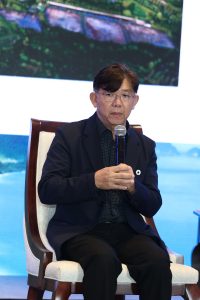
Mr. Thanit Kongkaew, Director of Sustainability at the Mae Fah Luang Foundation under Royal Patronage, said that although the Doi Tung Development Project has successfully restored forests and increased local incomes by around 30 times compared with the project’s early years, the challenges facing the area have changed.

Instead of poverty and degraded forests, communities are now dealing with increasing climate volatility, including summer storms, hailstorms and landslides that are becoming more severe and frequent.

Field data showed that when a summer storm struck, a forest dominated by a single pine species suffered damage to as much as 80% of its treetops, while a nearby forest with greater plant diversity suffered only 2% damage. This demonstrates that biodiversity is not merely valuable for conservation; it provides resilience that helps ecosystems withstand disasters.

“Nature does not exist in separate compartments. A change in one place can reverberate throughout an entire system. Caring for people, forests, water and biodiversity therefore has to happen together, in an integrated way and within the ecological boundaries that nature itself has defined.”
Nature Positive Finance: Natural Capital as a New Foundation for Sustainable Financial Growth

The Nature Positive Finance panel highlighted the enormous imbalance between finance flowing into activities that negatively affect nature and finance directed towards nature restoration.

The ratio is approximately 30 to 1, with around THB 260 trillion a year flowing towards activities with negative impacts on nature, compared with approximately THB 7 trillion annually for nature restoration.

The financial sector must therefore bring natural capital into data systems, risk assessment, disclosure and capital allocation in a tangible and systematic way.

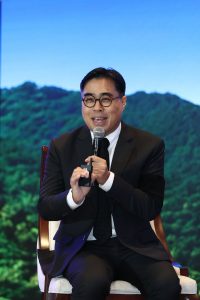
Mr. Kwanpadh Suddhi-Dhamakit, Senior Country Officer for World Bank Thailand, said nature is “economic infrastructure.” Yet existing accounting systems do not reflect the extent to which GDP growth may occur alongside the degradation of nature.

Natural Capital Accounting is therefore an important tool for measuring the quantity and condition of natural resources and the ecosystem services they provide, before using this information for risk assessment and financial decision-making.

“If we think of Thailand as a company, natural capital is like its machinery. The more it is used, the more it deteriorates. If we fail to maintain or restore that machinery, eventually it will no longer be able to produce anything for us.”
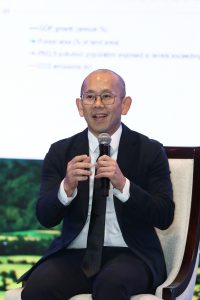
Ms. Chananun Supadulya, Director of the Financial Institutions Strategy Department at the Bank of Thailand, said nature degradation can transmit risks to businesses and financial institutions through both physical risks, such as natural disasters and resource scarcity, and transition risks arising from new global regulations and standards.

One example is the EU Deforestation Regulation (EUDR), which requires agricultural products exported to the European Union to be traceable and verified as not originating from deforested land.

Thailand can build on its existing climate finance infrastructure and extend it towards Nature Finance through frameworks such as the Taskforce on Nature-related Financial Disclosures (TNFD) and Thailand Taxonomy. The challenge, however, is that nature impacts are highly location-specific and therefore more difficult to measure.

“The key is to make the impacts measurable and to connect those impacts on nature back to products and the decisions people make in their everyday lives in a tangible way.”
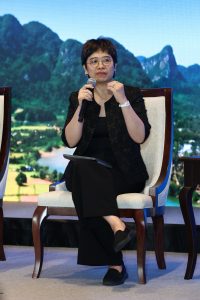
Mr. Pipit Aneaknithi, Chairman of Global Sustainability at KASIKORNBANK Public Company Limited, said there is no need to wait until the Nature Positive market or every regulatory framework is fully developed before taking action.

If stakeholders share a common intent, they can begin immediately by establishing disclosure standards, common rules, risk-reduction mechanisms and incentives to mobilize private capital towards addressing structural challenges. He proposed four principles for driving progress: target, measure, incentivize and scale.

“New rules may take ten years to materialize, but capital can move immediately. Today’s externalities can become tomorrow’s natural assets.”
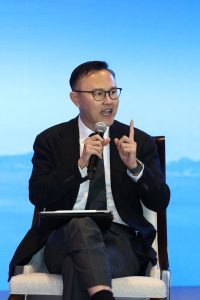
Ms. Sarinee Achavanuntakul, Executive Director of Climate Finance Network Thailand (CFNT), said Nature Finance must aim to restore nature to a condition better than before.

The carbon credit model should not simply be applied directly to biodiversity because ecosystems are location-specific and one area cannot be substituted for another. Indicators must therefore be simple enough for financial institutions to use, but not so simplistic that they facilitate greenwashing.

“Money loses value as it is spent, but nature gains value as it is restored. What we need to measure is therefore not simply the number of trees planted, but the health and integrity of the ecosystem that has been restored.”
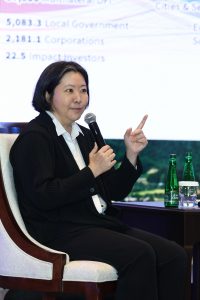
Five Community Businesses Show How Natural Capital Can Create Local Economic Opportunities

Another major session showcased the outcomes of five community businesses selected as finalists in the 2026 Sustainable Community Business Leadership Incubation Program.
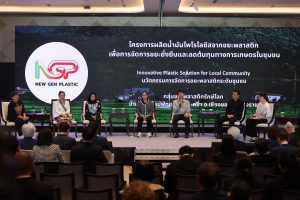
The initiative builds on livelihoods created under the Carbon Credit from Community Forests for Sustainability Project, with the objective of transforming carbon credit revenues into seed capital for businesses, income generation and green local economies that communities can sustain independently.

The five businesses demonstrated how natural capital and local environmental challenges can be turned into economic opportunities.

Their approaches ranged from returning business income to community forest management, creating livelihoods for women affected by changes in the Mekong River, transforming marine waste into creative products, converting dry leaves into soil-enrichment materials while reducing wildfire risks, and turning plastic waste into energy for the agricultural sector.

The session reinforced the principle that conservation can only be sustainable when communities are not merely recipients of financial support, but are able to become entrepreneurs who generate income, manage capital and reinvest profits into the natural resources under their care.

This enables people to thrive while forests survive, while strengthening local economies at the same time.

Building a Nature-based Economy

M.L. Dispanadda Diskul, Secretary-General and Chief Executive Officer of the Mae Fah Luang Foundation under Royal Patronage, said in his closing remarks that the Foundation has long worked with the reality that “when people are hungry, forests disappear.”

As long as people lack choices and income, forests will continue to be used as a means of survival. Yet lessons from all the Forum’s sessions show that this equation does not have to remain true if forests and the environment can become part of income generation and business.

“I would like everyone to imagine a balance scale. On one side is development and on the other are natural resources. The triangle underneath that keeps the scale in balance is people. All of us determine which way that balance will move.”
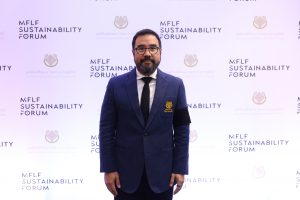
M.L. Dispanadda called on all sectors to work together to build a Nature-based Economy, or an economy that grows on the foundation of nature.

The process begins with assessing the value of and impacts on nature through Natural Capital Accounting, disclosing businesses’ resource use and environmental impacts transparently, and incorporating this information into balance sheets, financial statements and investment plans.

The same information can then be used in risk assessments and to direct capital towards conservation, restoration and income creation for communities responsible for managing natural resources.

This process would allow businesses to see both the “yolk” — the resources directly used and the direct impacts of their operations — and the “white” — the wider impacts extending across value chains, communities and surrounding ecosystems.

It would also help bridge the gaps between businesses, financiers, government agencies and communities, with nature serving as the common link among them.

“We have to shift our perspective from seeing nature as an expense to seeing nature restoration as an investment whose returns can be measured. The question is: what is the Cost of Inaction? If we fail to act today, there may come a time when no amount of money will be enough to solve the problem, because we will simply have run out of time.”

In addition to valuing nature and integrating it into the economic system, M.L. Dispanadda proposed advancing the recognition of Nature Rights — the rights of nature — so that nature has the right to restore itself and maintain the integrity of ecosystems, rather than being viewed solely as a resource that humans are entitled to exploit.

“We often talk about human rights. But when we talk about Human Rights, perhaps we focus too much on ourselves. Today, I would like to add another right: Nature Rights — the rights of nature. How can we give nature the right to restore itself and the right to regenerate its ecosystems, so that all of us can live better lives and have a better future?”

From Forum Discussions to Practical Action

In addition to the main sessions, four afternoon activities provided participants with opportunities to explore practical tools and approaches for applying Nature Positive principles within their own organizations.

These included Business & Biodiversity 101, co-hosted with PwC Thailand; Climate Adaptation & Climate Risk Assessment, co-hosted with PTT Exploration and Production Public Company Limited (PTTEP); Water Stewardship, co-hosted with TCP Group; and an ESG Clinic, co-hosted with KASIKORNBANK Public Company Limited.

The sessions were designed to connect insights from the main Forum with practical approaches to risk assessment, strategy development and implementation within the specific context of each organization.

MFLF Sustainability Forum 2026 therefore went beyond the exchange of ideas. It laid out an interconnected pathway for action — from legislation and national targets, to the assessment and disclosure of natural capital, the integration of nature-related information into business and financial decisions, the design of financing mechanisms that channel capital to local areas, and the creation of livelihoods that enable people to care for nature sustainably.

Ultimately, a business that seeks to grow sustainably must bring nature into the equation as a fundamental factor in its growth.

This is no longer something we can afford to ignore.
MFLF Joins Nature Lunch at Davos 2026, Highlighting the Role of Nature as the Foundation of a Sustainable Economy on the Global Stage

M.L. Dispanadda Diskul Participates in Nature Lunch at Davos 2026, Highlighting Nature as the Foundation of a Sustainable Economy on the Global Stage

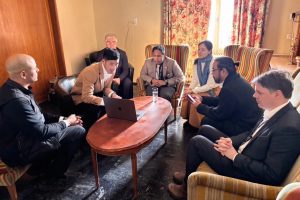
On 22 January 2026, M.L. Dispanadda Diskul, Secretary General and Chief Executive Officer of the Mae Fah Luang Foundation under Royal Patronage, was invited to participate in Nature Lunch at Davos 2026: Where Nature Meets Leadership, held at Hotel Schatzalp in Davos, Switzerland. The event was organized alongside the World Economic Forum (WEF) Annual Meeting 2026 as a platform for dialogue among global thought leaders from diverse sectors.

Nature Lunch is an exclusive high-level forum that brings together key decision-makers from business, finance, investment, science, and civil society to accelerate the transition toward nature-positive business, finance, and policy outcomes. In 2026, the event was co-hosted by the European Biodiversity Coalition, Innovate 4 Nature, Biodiversity Bridge, and Nature Wealth Foundation—international networks and organizations working to connect biodiversity with policy, finance, and innovation.

The forum welcomed more than 120 participants from leading global organizations, including Deutsche Bank, KPMG, PwC, Standard Chartered, IKEA, Holcim, Good Carbon, and Act for Nature, to exchange strategic perspectives and foster practical collaboration. Discussions took place against the backdrop of a critical reality: approximately 55 percent of global GDP depends on nature, while ecosystems worldwide are degrading at an unprecedented pace.

Key highlights of the event included a panel discussion titled “The Nature Imperative – What Business Must Do Now,” featuring Johan Rockström, the scientist behind the Planetary Boundaries framework, which defines the ecological limits humanity must not exceed. The program also featured the Innovate 4 Nature Award ceremony and high-level networking sessions aimed at advancing nature-positive solutions with the potential to create up to 395 million jobs and generate more than USD 10 trillion in economic value by 2030, while repositioning nature from an “invisible cost” to a “core asset of the global economy”.

On this occasion, M.L. Dispanadda Diskul shared the Mae Fah Luang Foundation’s nearly four decades of experience in nature-based development, demonstrating how nature can serve as a foundation for sustainable livelihoods and economic resilience. From the Doi Tung Development Project, which integrates human development with ecosystem restoration, to the continuous development of biodiversity baseline data, and the implementation of the Carbon Credit from Community Forests for Sustainability Project, the Foundation’s work has expanded from Doi Tung to 12 provinces nationwide, improving the quality of life for more than 160,000 people.

This integrated approach drew interest from participants as a practical case study in linking nature conservation, economic development, and community well-being. Among the esteemed participants who joined was Princess Dr. Auguste of Bavaria, a zoologist and behavioral scientist who plays a significant role in advancing global biodiversity conservation efforts.